
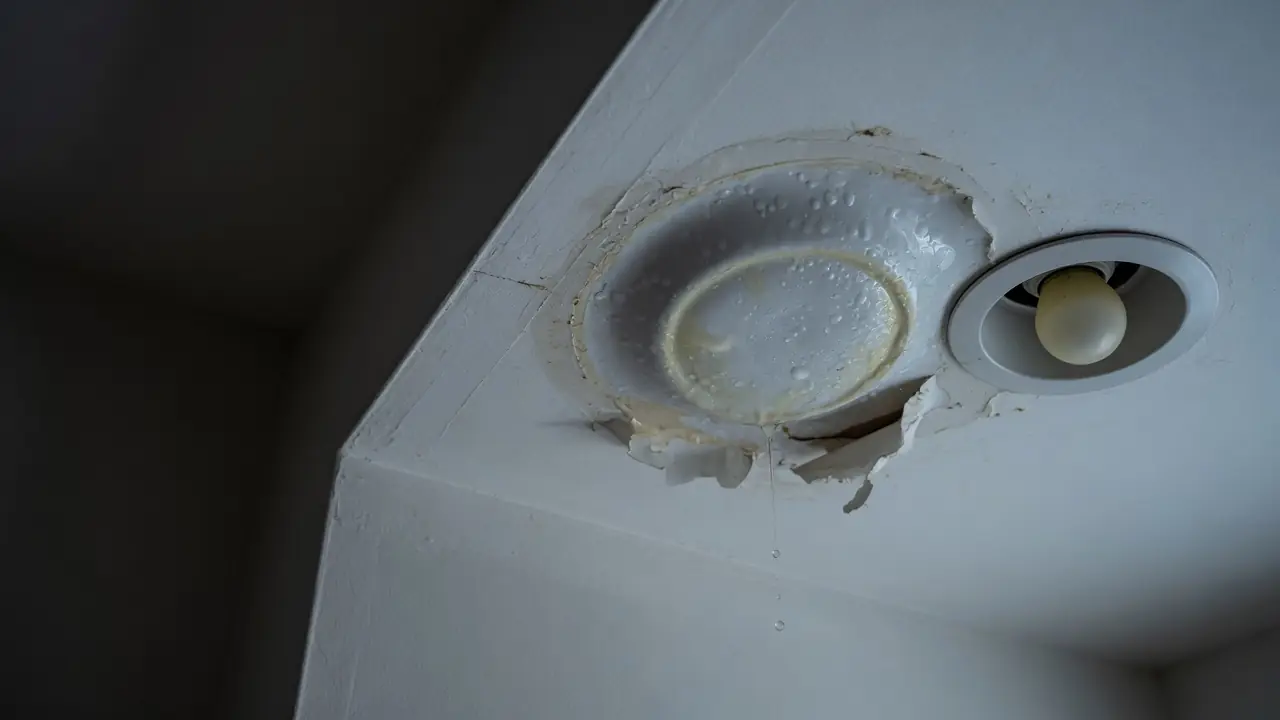
Warning signs such as brown stains, sagging drywall, peeling paint, and musty odors indicate hidden moisture that can lead to structural damage, mold growth, and electrical hazards. Properly identifying the source of the leak, taking immediate protective steps, and relying on professional restoration services like Sharpline Inc can help repair damage and protect the home from future problems.
That expanding brown spot over your living room couch isn’t just ugly. It's a ticking clock.
If you own a house long enough, you'll eventually look up and see water right where it shouldn't be. The immediate panic is always the same. You don't know where the water is coming from, how much is pooling above the drywall, or what it’s going to cost to cut it all out.
Homeowners usually assume the worst, a big roof failure. But after spending years in the trades, we can tell you the true source is often hiding right under your nose, tucked between the floor joists.
Finding out what causes water damage on a ceiling takes a bit of detective work. Water is lazy. It takes the path of least resistance, meaning it will run along pipes, trusses, and wiring before finally soaking through your ceiling in a completely different room.
Here is a look at the most frequent culprits behind ceiling moisture. We'll show you how to track a leak like an inspector, and what you need to do right this second to keep your drywall from caving in.
Key Takeaway: What to Do Right Now
If water is dripping onto your floor right now, stop reading and do these three things:
- Clear the drop zone: Move the rug, push the couch back, and get a heavy-duty bucket underneath the drip.
- Kill the water supply: If it’s not raining outside, you likely have a plumbing issue. Shut off your home's main water valve.
- Relieve the pressure: Grab a screwdriver and poke a tiny hole right in the center of the ceiling bulge. It sounds crazy, but draining the water prevents the heavy drywall from collapsing completely.
Early Warning Signs You Have Ceiling Water Damage
Catching moisture early keeps repair bills small. You don't want to wait until water is physically splashing onto your coffee table. Keep an eye out for these visual and olfactory red flags:
Discoloration and Brown Water Stains
You know the look. That copper, yellow, or dark brown ring spreading across the white paint. It starts small and slowly creeps outward. That nasty color actually comes from the water dissolving the minerals and adhesives inside your drywall and pushing them to the surface.
Sagging, Bowing, or Bubbling Drywall
Standard half-inch drywall is basically just heavy chalk sandwiched between paper. When it gets wet, it turns to mush. As water pools on top of it, the material loses its strength and starts to visibly bow under the weight. If your ceiling looks like a fat belly, you have a major emergency on your hands.
Peeling Paint or Crumbling Plaster
Moisture completely destroys the chemical bond between your paint and the ceiling. If the paint is blistering, flaking, or peeling off in long strips, water is trapped directly behind it.
Musty Odors and Unexplained Mold
Hidden moisture inside a dark, warm ceiling cavity is a breeding ground for fungus. Sometimes you smell a leak before you see it. If a room suddenly takes on a damp, earthy, old-gym-sock smell, you likely have a slow drip somewhere above you.
Expert Insight: "We see this all the time. A homeowner paints over a water stain with a heavy primer, thinking they fixed the problem. If you don't trace the leak, that water just redirects and rots out your wooden floor joists instead." — Sharpline Inc.
7 Most Common Causes of Water Damage on a Ceiling
When we pull up to a house with ceiling water damage to investigate, we always run through a mental checklist.
Here are the 7 most common culprits:
- Roof leaks and compromised shingles
- Plumbing system failures
- HVAC system condensation and drip pan leaks
- Clogged gutters and ice dams
- Malfunctioning water heaters
- Poor bathroom ventilation
- Aging window and roof flashing
Let's break down exactly how each one destroys your ceiling.
1. Roof Leaks and Compromised Shingles
Your roof takes a beating. High winds tear off shingles, the sun bakes the underlayment, and falling branches puncture the membrane. When rain gets into the attic, it rarely drips straight down. It runs down the rafters and drips onto a random spot. Knowing the early signs of roof damage helps you patch small exterior problems before they become huge interior nightmares.
2. Plumbing System Failures
If you have a two-story home and the stain is directly beneath a bathroom, kitchen, or laundry room, plumbing is almost always the guilty party.
- Supply Lines: Degraded copper, loose PEX fittings, and old shut-off valves under sinks can release a steady, hidden drip. Understanding how to fix a leaking pipe can save your kitchen, but if the pipe is in the ceiling cavity, you'll need a pro to open the drywall safely.
- Drains and Wax Rings: We tear out a lot of kitchen ceilings simply because the wax ring under the toilet directly upstairs finally wore out, letting flush water seep into the subfloor.
3. HVAC System Condensation and Drip Pan Leaks
"In our years of inspecting attics, we've found that a blocked AC drain line causes just as many ceiling collapses as a leaky roof during the summer months." Air conditioners pull humidity out of the air. That moisture drips into a shallow metal or plastic pan. If the drain line on that pan gets clogged with dust or algae, the pan overflows. It spills gallons of water straight onto the bare ceiling joists below.
4. Clogged Gutters and Ice Dams
Gutters pull rainwater away from your foundation. But when they get jammed with wet leaves and pine needles, the water backs up. When temperatures drop, that trapped water freezes into an ice dam. As snow melts on the warmer parts of your roof, it hits the dam, pools up, and seeps backward under the shingles. Eventually, it runs down the inside of your exterior walls and ruins the edge of your ceiling.
5. Malfunctioning Water Heaters
Putting a water heater in an attic saves floor space, but it's a big liability. A corroded holding tank or a blown pressure relief valve will dump 50 gallons of scalding water directly through your ceiling in a matter of minutes. Always check the catch pan under these units.
6. Poor Bathroom Ventilation
Not all water intrusion comes from a broken pipe. Sometimes it's just the air. If you take scalding hot showers and your bathroom exhaust fan is broken (or undersized), that heavy steam gets trapped. It condensates on the ceiling, eventually causing the paint to peel and black mildew to spot the drywall.
7. Aging Window and Roof Flashing
Flashing is the metal stripping used to direct water away from chimneys, vent pipes, and skylights. Over the years, the roofing tar and caulking around that flashing dry out and crack. Rainwater easily slips through those tiny gaps, runs down the roof decking, and drips into the insulation above your ceiling.
Interactive Diagnostic Flowchart: Roof or Plumbing?
Try this quick thought exercise to narrow down where your leak is coming from:
- Is it actively raining outside?
- Yes: It's highly likely a compromised roof, bad chimney flashing, or a backed-up gutter.
- No: Move to the next step.
- Is there a bathroom or kitchen directly above the stain?
- Yes: Suspect a failed supply line, a bad shower drain seal, or an overflowing tub.
- No: Move to the next step.
- Is your AC blasting, or do you have an attic water heater?
- Yes: Grab a flashlight and check the HVAC condensation pan and the water heater catch pan immediately.
Is Ceiling Water Damage Dangerous?
Ignoring a wet spot is playing a very dangerous game with your home and your health.
Structural Risks
Water is heavy. One gallon weighs over eight pounds. Drywall is not meant to hold weight. A saturated ceiling can give way without a second of warning, dropping a few hundred pounds of wet insulation, drywall mud, and dirty water onto whoever happens to be sitting below it.
Health Hazards
Mold spores only need moisture, a warm environment, and organic food (like the paper backing on your drywall) to multiply. Toxic growth can explode in a ceiling cavity within 48 hours. If you start dealing with unexplained respiratory issues in your home, you might have to call in professionals for mold remediation services before the air is safe to breathe again.
Electrical Fire Hazards
Think about what's inside your ceiling. It’s packed with Romex wire, junction boxes, and recessed lighting canisters. When water mixes with live electrical components, you get short circuits, blown breakers, and a very real risk of an electrical fire.
What to Do When You Spot a Ceiling Leak
You have to move fast. Here is the exact playbook to protect your house.
- Protect the room: Move your electronics. Roll up the rug. Get a large bucket directly under the drip zone.
- Kill the pressure: If it hasn't rained in a week, you have an internal leak. Go outside or into your basement and shut off the main water valve for the whole house.
- Drain the bubble: Grab a Phillips head screwdriver. Gently poke a hole right in the lowest part of the ceiling bulge. Controlling the flow into a bucket is a hundred times better than letting the whole ceiling crash down.
- Call the experts: Don't try to rip down the wet drywall yourself. You don't know what wires or pipes are sitting on top of it. Call a local restoration crew for professional ceiling leak repair so the job gets handled safely.
Why Trust Sharpline Inc for Water Damage Restoration?
When water is actively destroying your living room, you don't have time to gamble on inexperienced contractors.
At Sharpline Inc, we bring years of hands-on experience in general contracting, plumbing, and roofing to every single job. We have gutted, dried, and rebuilt hundreds of compromised ceilings in this community.
Our whole approach is built on getting the diagnosis right. We refuse to just slap some joint compound over a stain and walk away. We use high-end thermal imaging cameras and digital moisture meters to physically track the water path behind your walls. We find the root cause, fix it permanently, and then restore your room.
As a local crew, our mission is straightforward: protect your home's structural integrity, give you transparent pricing, and show up fast when you have an emergency. We bring peace of mind when you need it most.
Frequently Asked Questions
What is the most common cause of water damage on a ceiling?
The most common cause of water damage on a ceiling is a plumbing leak from a bathroom located directly above. Other frequent culprits include damaged roof shingles, overflowing HVAC drain pans, leaking water heaters, and deteriorated pipe sealants.
How do professionals track a hidden leak?
We rarely start tearing down walls immediately. We use thermal imaging cameras that show temperature differences in the drywall. Cold spots usually mean hidden moisture. We trace that cold path right back to the broken pipe or roof defect.
Will a water stain just dry up and go away?
No. Even if you fix the plumbing leak and the drywall completely dries out, the brown mineral ring is permanent. You have to seal it with an oil-based, stain-blocking primer before repainting, otherwise, the stain will bleed right through the new paint.
Is it safe to sleep under a leaking ceiling?
Absolutely not. You never know when the drywall is going to hit its breaking point. Plus, water interacting with your bedroom's ceiling lights creates a serious fire hazard. Sleep in another room until a contractor checks it out.
How much is this going to cost me to fix?
It varies wildly. If we just need to patch a small section of drywall and paint, it’s a few hundred bucks. If water has rotted out the floor joists, sparked a mold infestation, or requires tearing out a custom tiled shower upstairs to fix a drain, you are looking at several thousand dollars.
Does homeowners insurance cover ceiling water damage?
Yes, but usually only for sudden, accidental events like a burst pipe or severe storm. Claims are almost always denied if the leak was caused by long-term neglect or poor maintenance.
How quickly can mold grow inside a wet ceiling?
Very fast. Mold only needs 24 to 48 hours of consistent moisture to begin blooming inside a dark, warm ceiling cavity.
Why does my ceiling only leak during the summer?
This is a classic HVAC issue. Your attic air conditioner produces gallons of condensation in the summer, if the drain line clogs, the overflow pan spills directly onto your ceiling.
Can I fix a sagging, water-damaged ceiling myself?
We advise against it. Saturated drywall is heavy and dangerous to remove, and DIY repairs often trap hidden moisture in the framing, leading to severe mold growth.
How can I tell if my ceiling is about to collapse?
Look for severe sagging, bowing, or bubbling. If the drywall seams are separating or you hear faint popping sounds as screws tear through the wet gypsum, a collapse is imminent.
Final Thoughts
A wet ceiling is never a problem you can put off until next weekend. Whether it's a blown shingle, a clogged air conditioner, or a worn-out plumbing fitting, finding leaking ceiling causes early is the only way to save your home from major structural decay.
Trust what your house is telling you. If you see brown stains, notice bubbling paint, or smell a musty odor, take action. Don't let a tiny drip turn into a collapsed roof.
Tired of staring at that water stain? Give the team at Sharpline Inc a call today. We'll track down the source, stop the water, and make your ceiling look brand new again.