
Roofing, Windows & Plumbing in Chesapeake City, MD
One number for plumbing, electrical, heating & cooling, roofing, handyman work and more in Chesapeake City.
Part of our Elkton service area · median home here was built around the late 1940s
What breaks in Chesapeake City
The age of the housing decides the work.
Chesapeake City sits on both banks of the Chesapeake and Delaware Canal and owns its own water mains and sewer, which serve about 420 homes. The houses are old. The Census puts roughly 45 percent of them before 1940 and about 60 percent before 1960, though in a town this small those shares carry a wide margin of error. Very few homes are on piped gas: about 3 percent of occupied homes heat with it, against about 57 percent on electricity, 22 percent on fuel oil and 17 percent on propane. So a heating or water heater job here starts with the tank or the circuit, not a gas meter. Most houses are detached, and about three in four are lived in by their owners.
Exterior work south of the canal waits for the Historic District Commission
The town's Historic District is on the south side of the canal, and the National Register district there, listed in 1974, runs from the canal to Fourth Street along Bohemia, George and Charles Streets. The town code says no permit for an exterior change in the Historic District can be granted until the Historic District Commission has acted and the Planning Commission has approved it, and the work cannot start before both. A roof, siding or window job there is scheduled around that review, not ahead of it.
The Commission reviews the product, not just the plan
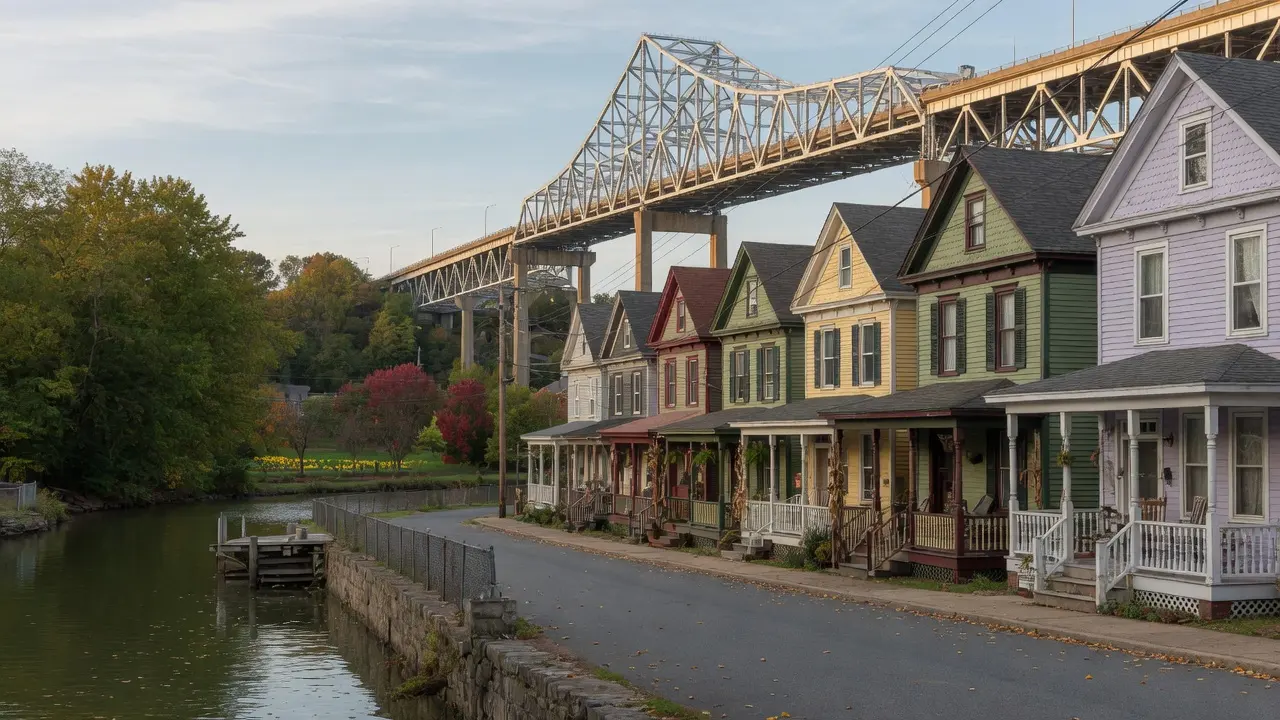
Many of the district's buildings are two and three story wood houses with clapboard siding, many of them Greek Revival, with Italianate examples, a couple of Second Empire mansard roofs and a few Queen Anne buildings. The Commission judges materials, texture and compatibility, and its guide asks applicants to submit product information for roofing, windows and siding. Its most common applications are paint colors, siding, windows, roofs, porch parts, shutters, gutters and chimneys. The product has to be chosen before the application goes in, which means the quote comes first.
Roof water and sump water stay out of the sewer
The town's wastewater plant on the north side of the canal was completed in 2023 and is permitted for 200,000 gallons a day. The pipes that feed it are older, and the town's 2024 Comprehensive Plan says that collection system is badly affected by inflow and infiltration, naming downspouts piped into sewer lines as one cause. Section 280-48 of the town code bans sending roof runoff, groundwater or subsurface drainage into the sanitary sewer. A downspout, sump pump or foundation drain tied into that line has to come off it.
Your pipe starts at the edge of the pavement
Under the town code, the owner is responsible for the water line from the property line, taken as the edge of pavement or the inside of the curb, to the house. A leak on that stretch has to be repaired by a master plumber at the owner's expense, and the owner pays for the water and sewer charges lost through it. When the town decides the service from the main has worn out, it replaces the part up to the property line at its own expense. Opening a sidewalk, curb or street to reach a line takes a separate permit from the Town Inspector.
What we run in Chesapeake City
What homeowners here search for most
Roofing
Roofs are one of the most common applications before Chesapeake City's Historic District Commission. Replacing worn roofing in kind is ordinary maintenance, but a change of material needs the Commission and the Planning Commission to act first, with product information submitted for the roofing chosen.
See roofing →Windows & Doors
Windows sit on the Commission's list of common applications next to roofs and siding, and the guide asks for product information on the replacement units. On a Greek Revival or Italianate house south of the canal, the window chosen has to suit the building's materials and texture, so the product decision and the review schedule come before any order is placed.
See windows & doors →Plumbing
Plumbing in Chesapeake City answers to the town's own water and sewer code. The owner's line starts at the edge of pavement, on-property leaks go to a master plumber, the water cannot be shut off or turned on without the Water/Sewer Clerk's authorization except in an emergency, and downspouts or sump pumps tied into the sanitary sewer have to come off it. About 45 percent of the houses also predate 1940.
See plumbing →We cover the other trades in Chesapeake City too — all ten services. Not sure which one it is? Describe the symptom and we will work out the cause.
On the ground in Chesapeake City
Chesapeake City issues its own zoning permit, and the town code attaches a condition to it: no building or zoning permit is issued while the applicant, the owner or the property owes the town fines, charges, taxes or assessments. A past-due water and sewer bill can hold up a porch or an addition until it is settled. In the Historic District, a demolition application goes to the Historic District Commission for review before the Zoning Administrator can issue the permit.
When you call, tell us three things. First, which side of the canal the house is on and whether it is inside the town's Historic District on the south side. Second, what heats it, because most houses here run on electricity, oil or propane rather than gas. Third, whether the job touches anything on the outside of the house or anything at the curb. Those answers decide whether the work waits on a monthly Commission meeting, a call to the Water/Sewer Clerk, or nothing at all, and we would rather know before the quote than after it.
Chesapeake City questions
Straight answers for Chesapeake City.
Do I need Historic District Commission approval to reroof with the same material?
No, if it is true like-for-like maintenance. The town's historic district guide says ordinary maintenance and replacement with like materials needs no permit. A change of roofing material does, and the application has to include product information for what is going on. The Commission meets on the fourth Tuesday of the month at 6:30 pm, and applications are due seven days before the meeting. Work cannot begin until the Commission has acted and the Planning Commission has approved.
A pipe burst at night. Can a plumber shut the water off?
Yes. The town code allows a plumber, contractor or anyone else to shut water off or turn it on in an emergency such as broken pipes or frozen meters, or when Town Hall is closed. The $500 charge for doing it without the Water/Sewer Clerk's authorization is waived in an emergency. The Clerk still has to be told the location and time within two hours during normal working hours, or by the next working day on evenings, weekends and holidays, and missing that notice carries a $500 charge.
The town says the overhead lines on my street are going underground. What do I have to do?
Put your own connection underground as well. Under Chapter 151 of the town code, the town can notify a utility company to move its overhead lines in the Historic District underground, and the owner of any property served by those relocated lines must place its connections underground too. Each affected owner is given an estimate of that cost, and the town provides financing for it. That can mean a new underground run to the house, so it is worth planning with an electrician once the relocation is announced.
I want to turn part of my house into an in-law apartment. Does the town need to know?
Yes, before construction starts. Chesapeake City's code treats a new space with its own bathroom, kitchen and sleeping area as a new living unit, and a new living unit is subject to a water and sewer connection or allocation fee. The owner has to file the application and get town approval before the work begins. Ask Town Hall for the current amount before you budget the plumbing, electrical and finish work.
Nearby