
Plumbers, roofers and electricians in Pittsburgh, PA
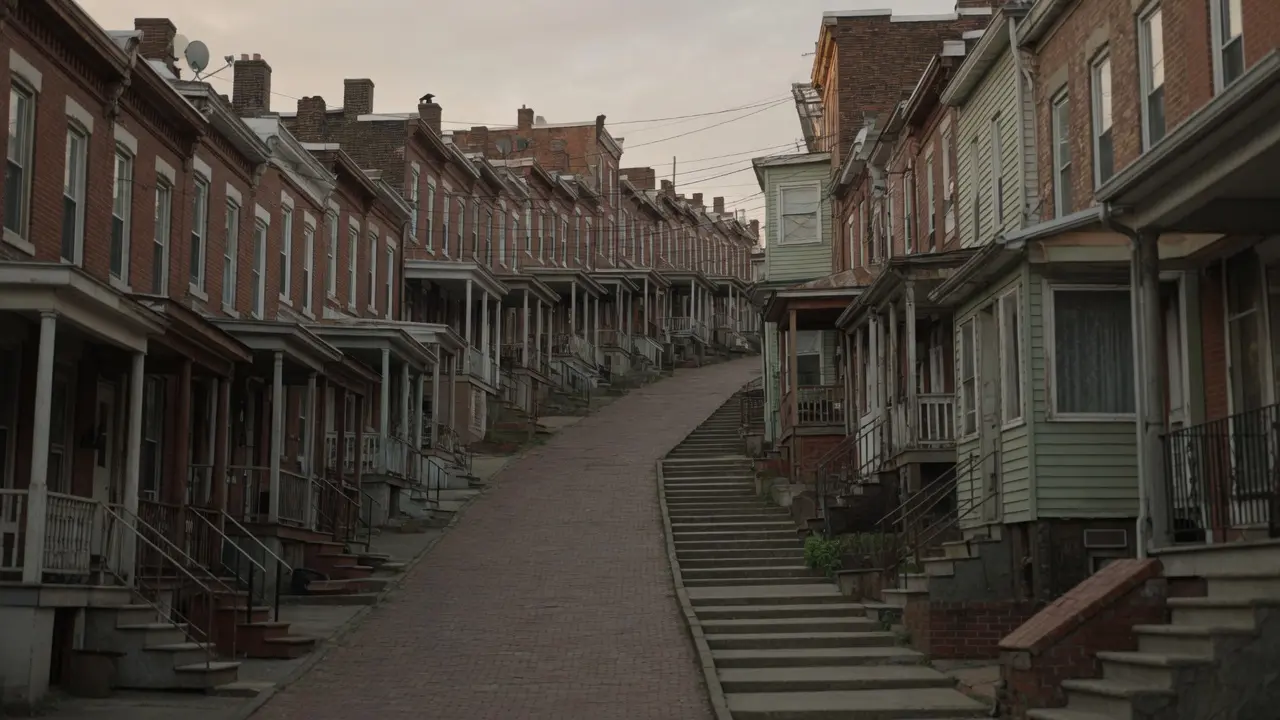
Sharpline handles plumbing, roofing, electrical, heating and cooling, handyman work and basement water for homes in Pittsburgh and the surrounding Allegheny County suburbs. Nearly half of the houses inside city limits were built before 1940, so most of the work here is an old system reaching the end of its life rather than a new one failing early.
Pittsburgh · Baldwin · Bethel Park · Brentwood · Castle Shannon · Dormont · McCandless
What actually breaks here
The housing stock decides the work.
About 47% of the homes inside city limits were built in 1939 or earlier, the median home dates to 1944, and roughly two in three predate 1960. Around one in seven is a rowhouse or twin sharing a wall with a neighbor. Across Allegheny County the houses are younger, with a median build year of 1958, and more than a quarter of county homes also predate 1940. Add steep lots, old coal mines under large parts of the county and a combined sewer system across most of the city, and the work here is different from a flat suburb built in the 1990s.
One number covers all ten trades. That matters in a Pittsburgh house because the problem rarely belongs to one of them. Water in the basement after a storm can be a downspout, a cracked wall, or the city sewer backing up through the floor drain, and each of those is a different fix. We work out which it is before anyone quotes you for the wrong one. Where a job inside Pittsburgh needs a city or Allegheny County trade license, we confirm who is doing that part before anything is booked.
Sharpline's background is keeping apartment buildings and commercial properties running, where one company answers for every trade on the job. A prewar Pittsburgh house benefits from the same arrangement more than most, because its problems tend to cross trades. Call 610-550-3248.
What we run here
Services available in Pittsburgh
Our service mix differs by market, partly because the housing itself is different.
Plumbing
Galvanized supply lines, cast iron drains, lead service lines in older homes, and floor drains that back up when the combined sewer overflows.
See plumbing →Roofing
Slate and tile on prewar houses, low-slope roofs on rowhouses, and the ice damming that comes with long stretches of freeze and thaw.
See roofing →Heating & Cooling
Old boilers and furnaces in houses that were never built for central air, plus hot and cold rooms on hillside homes.
See heating & cooling →Electrical
Undersized services and aging wiring in houses built long before today's loads, including EV chargers and heat pumps.
See electrical →Handyman
The steady list an old house produces: sticking doors, loose railings on exterior stairs, trim, caulk and small repairs.
See handyman →Basement Waterproofing
Wet basement walls, failing sump pumps and water coming through where the hillside pushes against the foundation.
See basement waterproofing →Foundation Repair
Cracked and bowing basement walls, with the cause checked first, whether that is soil, water or movement below the house.
See foundation repair →Painting & Drywall
Plaster walls and ceilings in older houses, lead-safe prep on pre-1978 homes, and exterior trim that takes a beating in winter.
See painting & drywall →Windows & Doors
Replacing drafty original windows and doors, and fixing doors that stop closing as an old house settles.
See windows & doors →Tile & Flooring
Refinishing original hardwood, and floors in basements and bathrooms where moisture is the real problem.
See tile & flooring →Why does my Pittsburgh basement flood in heavy rain?
Often it is not groundwater at all. Across about 75 percent of the city, sewage and stormwater run through the same pipes. When a heavy storm overwhelms that combined system, the water has to go somewhere, and a basement floor drain is one of the lowest openings it can find. That is why a basement can take water from the drain even when the walls are dry.
The fix depends on the source, so we check which one it is first. Water at the floor drain points to the sewer side, where a backwater valve on the house line is the usual answer. Water through the walls or the cove joint points to grading, gutters and drainage outside. Treating one as the other wastes money, and it is one of the most common mistakes on wet basement jobs.
Hillsides and old mines: what is under the house
Southwestern Pennsylvania has the highest concentration of landslides anywhere in the state, according to state geologists, and small backyard slides are common around Pittsburgh. A slope moving behind a house pushes soil and water against the uphill basement wall, which is why a bowed or cracked wall on a hillside house so often sits on the high side of the lot.
There is also the ground below. State maps show old underground coal mines beneath large parts of Allegheny County, including the city. The Pennsylvania DEP lists cracked foundation walls and floors, cracked brick and tilting as signs of mine subsidence. Damage from subsidence is usually excluded from standard homeowner insurance, so if you see new cracking, it is worth finding out whether your address sits over a mapped mine before any repair is priced.
Old pipes: galvanized, cast iron and lead lines
A house built before 1940 can still have its original galvanized supply pipe, which rusts closed from the inside and shows up as weak pressure upstairs. Cast iron drain stacks crack with age. And some older homes still have a lead water service line running from the street.
If yours does, Pittsburgh Water runs a Lead Service Line Replacement Reimbursement Program for eligible homes of up to four units, which reimburses part or all of the cost of a replacement done by a plumber the homeowner hires. The Allegheny County Health Department no longer allows a lead service line to be partly replaced or patched; it has to be replaced with approved material and inspected. Check the program's current terms with Pittsburgh Water before any work starts.
Freeze, thaw and what it does to a roof
Pittsburgh averages about 44 inches of snow a year, and on roughly 80 days a year the temperature crosses the freezing mark and back. That cycle is what opens up masonry, lifts flashing and drives ice damming at the eaves, where meltwater refreezes and backs up under the shingles.
Some older houses here still carry slate or tile. Those roofs can last a very long time, but they need someone who repairs them rather than replaces them by default. A rowhouse can have a low-slope section at the back that needs a different material from the pitched front. We tell you which part is failing before quoting the whole roof.
Who handles permits for work in Pittsburgh?
It depends on the trade and on where the house is. Inside city limits, building and electrical permits go through the City of Pittsburgh Department of Permits, Licenses and Inspections, mostly through its OneStopPGH portal. Plumbing is different: plumbing permits and inspections in Allegheny County are run by the Allegheny County Health Department, not by the city.
Outside the city, each of the county's municipalities handles its own building permits, so Mt. Lebanon's process is not Ross Township's. Home improvement contractors working in Pennsylvania register with the Office of Attorney General, and state law requires that registration number in advertising. Sharpline's is listed at the bottom of this page.
Where we work around Pittsburgh
We work inside the city of Pittsburgh and across the surrounding Allegheny County suburbs, including Mt. Lebanon, Bethel Park, Upper St. Clair, Dormont, Ross Township, Shaler, Penn Hills, Monroeville and West Mifflin. If your town is not on the list below, call and tell us where the house is. We will say plainly whether we can get to it.
Tell us what your house is doing
Describe what you are seeing, where it is, and when it started. Water, a smell, a noise, a crack that is getting wider. That is enough for us to send the right trade the first time. Call 610-550-3248.
Towns we cover
Everywhere we work in Pittsburgh
Pittsburgh · Baldwin · Brentwood · Castle Shannon · Dormont · Plum · Ross Township · Scott Township · Shaler · West Mifflin
Common questions
Straight answers.
Why does water come up through my basement floor drain when it rains?
In most of Pittsburgh, stormwater and sewage share the same pipes. When a heavy storm overloads that combined system, water can push back up through the lowest drain in the house. A backwater valve on the sewer line is the usual fix. If the water is coming through the walls instead, the cause is outside drainage and grading, which is a different job.
Does homeowners insurance cover foundation cracks from mine subsidence?
Usually not. Standard homeowner policies generally exclude mine subsidence damage. Pennsylvania offers separate Mine Subsidence Insurance through the state for homes over or near old mines, and state maps show mining under large parts of Allegheny County. If you see new cracks in foundation walls or floors, check whether your property sits over a mapped mine before you pay for repairs.
Does a handyman need a license in Pennsylvania?
Pennsylvania does not license handymen as a trade, but anyone who does $5,000 or more of home improvement work a year has to register with the Office of Attorney General as a Home Improvement Contractor, carry liability insurance, and put the registration number on ads, contracts and estimates. Electrical, HVAC and plumbing work inside Pittsburgh also needs the right city or county trade license, which a handyman registration does not cover.
Is there help paying to replace a lead water line in Pittsburgh?
Pittsburgh Water runs a reimbursement program for eligible residential properties of up to four units that replace a private lead or galvanized service line. Reimbursement is tiered by household income, with a stipend option, and the homeowner hires the plumber. Allegheny County requires a full replacement, not a partial repair. Confirm the current terms with Pittsburgh Water before work starts.
Who issues plumbing permits in Pittsburgh?
The Allegheny County Health Department. Its Plumbing Program handles plumbing permits and inspections across the county, including inside the city. Building and electrical permits in the city go through the Department of Permits, Licenses and Inspections instead, and suburban municipalities run their own building permits.
Why do basement walls on hillside houses crack on one side?
On a sloped lot, the uphill wall carries the weight of the soil and the water moving down the hill behind it. Over years that pressure cracks or bows the wall, while the downhill side stays sound. Fixing the water first, with gutters, grading and drainage, is what stops the crack from coming back after the wall is repaired.