
Plumbing and electrical in Pennsauken, from the house to the main
One number for plumbing, electrical, heating & cooling, roofing, handyman work and more in Pennsauken.
Part of our South Jersey service area · median home here was built around 1955
What breaks in Pennsauken
The age of the housing decides the work.
Pennsauken's median house went up around 1955, but a real share of the township is older than the war, so the postwar rancher story only covers part of it. The bigger local difference is what the house is connected to. Pennsauken runs its own water and its own sewer. The Merchantville-Pennsauken Water Commission pumps wells into the Potomac-Raritan-Magothy aquifer, and the Sewerage Authority's responsibility stops at the main in the street. Everything from your house to that main is yours. That one line decides who pays when a seventy-year-old lateral under the front yard finally gives up.
The sewer line under your front yard is yours
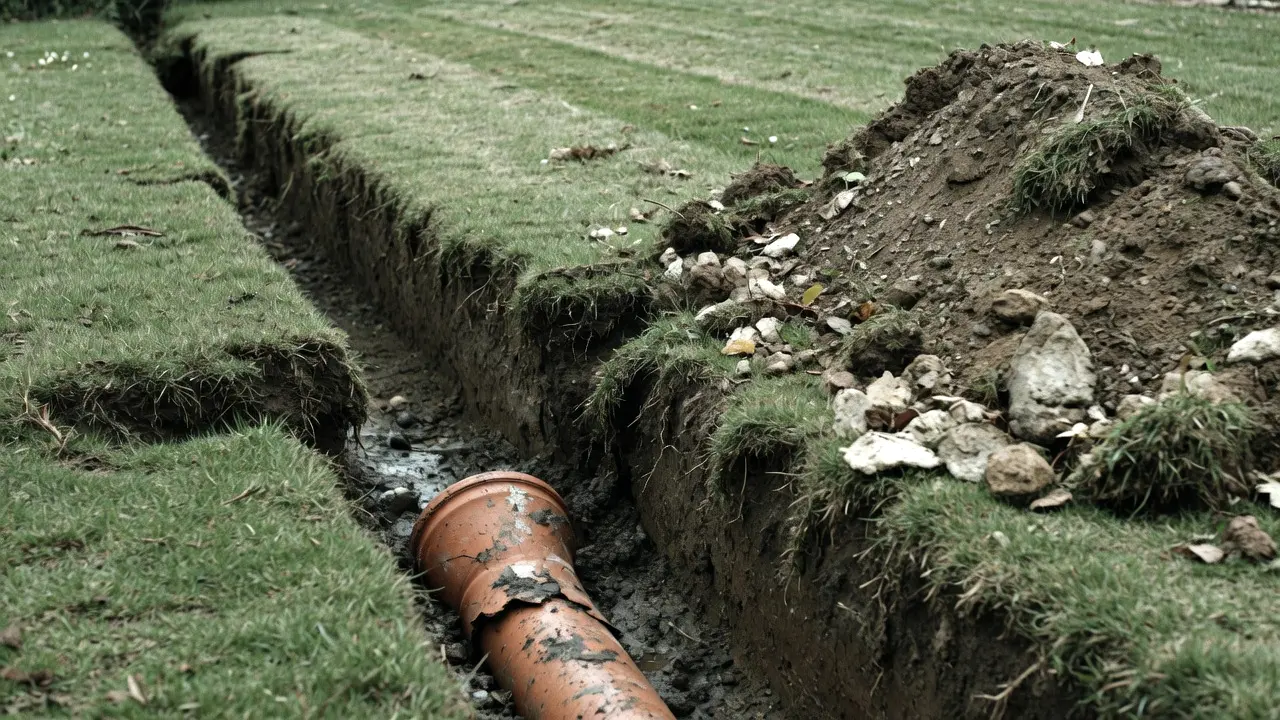
The Pennsauken Sewerage Authority's responsibility ends at the main in the street. Everything upstream of that point is the house connection, and the owner maintains, repairs, enlarges or replaces it, including the run under the sidewalk and the pavement. On a house from 1955 that pipe has been in the ground seventy years, usually beneath a driveway or a mature street tree. When a Pennsauken basement backs up, the first question is which side of that line the blockage sits on, and a camera answers it before anyone opens the street.
Fifteen wells, and not a river among them
Pennsauken co-owns its water utility with Merchantville, and has since 1926. The commission pumps from the Potomac-Raritan-Magothy aquifer through fifteen of its own wells and treats it at plants inside the service area, which also reaches parts of Cherry Hill and Camden. This is groundwater, not river water piped in from somewhere else. If your fixtures stain, your aerators clog or your water heater fills with sediment faster than you think it should, that is a water chemistry question, and the commission publishes an annual report that starts the answer.
No sale closes here without two certificates
Every one and two family dwelling in Pennsauken needs a housing resale certificate of occupancy and a fire certificate before the title changes hands, and getting them means passing a township inspection of the inside and the outside. The certificate holds for 180 days or one change of ownership. If the report comes back with violations, a buyer can sign an affidavit and take a temporary certificate rather than force the seller to fix everything first. Either way, book the inspection early enough that the list is not sitting between you and a settlement date.
Two build eras, one median year
The median says 1955, and the pre-war part of the township says otherwise. That is why the same call looks completely different on two streets a mile apart. A pre-war house brings knob and tube spliced into by four owners, a fuse panel and a cast iron stack. A 1950s rancher brings an original duct layout and a service planned for a house that had no central air and no second refrigerator. A price quoted over the phone off the median year is a guess.
What we run in Pennsauken
What homeowners here search for most
Plumbing
The Sewerage Authority here draws the ownership line at the main rather than at the curb, which makes the seventy-year-old house connection running the full width of a 1950s front yard the homeowner's pipe, and the township's own wells deliver groundwater whose minerals end up in water heaters, aerators and appliance screens.
See plumbing →Electrical
The 1950s panel behind the basement stairs was planned around a house where the furnace, the water heater and the range all ran on gas and nothing else drew much, so in Pennsauken the meter and the main breaker get sized up before anybody talks seriously about the central air, the finished basement or the charger that prompted the call.
See electrical →Handyman
A sale here has to clear two separate inspections before title transfers, a housing resale inspection and a fire certificate, which means two authorities, two lists and two sets of dates for what is usually the same handful of small interior and exterior items.
See handyman →On the ground in Pennsauken
Pennsauken has a geologic formation named after it. Geologists spell it Pensauken, with one n, from exposures near the mouth of Pennsauken Creek, and it is sand and gravel rather than clay. That matters before anyone digs here. Sand drains well, but it does not hold a trench wall, and it moves when water moves through it. It shows up as washed-out backfill along an old lateral, settled patches over a line somebody replaced twenty years ago, and soil undermined against a foundation by a downspout that has been dumping at the corner for years.
The other thing that shapes work here is the shape of the township. Pennsauken has the Delaware River on one side, Pennsauken Creek on the Burlington County line, and Route 130 and the Betsy Ross Bridge cutting through the middle of it. Delair and Fish House are Pennsauken. So are the streets off Westfield Avenue and the ranchers north of Route 73, and none of them look much alike. Tell us the street, not the township.
Pennsauken questions
Straight answers for Pennsauken.
Who owns the sewer line between my Pennsauken house and the main?
You do, the whole way. The Pennsauken Sewerage Authority's responsibility ends at the main in the street, and the house connection from your building to that point is the owner's to maintain, repair, enlarge or replace. That includes the length under the sidewalk and under the pavement. On a 1950s house the pipe is around seventy years old and often runs beneath a driveway or a street tree, so put a camera down it and locate the fault before anyone quotes a dig.
Where does Pennsauken's water actually come from?
From wells under the township, not from a river. Pennsauken and Merchantville have co-owned the Merchantville-Pennsauken Water Commission since 1926. It pumps the Potomac-Raritan-Magothy aquifer through its own wells, treats the water at plants inside the service area, and also supplies parts of Cherry Hill and Camden. Groundwater carries different minerals than surface water does, so if you are fighting staining, clogged aerators or sediment in a heater, start with the commission's annual water quality report.
What do I need in order to sell a house in Pennsauken?
A housing resale certificate of occupancy and a fire certificate, on every one and two family dwelling. The township inspects the interior and the exterior, and the certificate is good for 180 days or one change of ownership. If violations come back, the buyer has the option of signing an affidavit and taking a temporary certificate instead. Most of what gets written up is small: a detector in the wrong place, a missing GFCI, a loose rail, an exterior item.
The ground over my old sewer line has settled. Is that the pipe?
Often, yes, and the soil here makes it worse. The ground under Pennsauken is sand and gravel rather than clay. Sand does not hold a trench wall the way clay does, and it travels when water travels through it, so a leaking joint quietly washes backfill along the line and the surface drops in a strip. A dip that follows the run of the lateral is worth a camera. A dip somewhere random is usually just an old excavation settling.
My basement fixtures sit below the street. Should I have a backwater valve?
It is worth asking about on any Pennsauken house with a basement bath, laundry or floor drain. Plumbing code requires backwater protection where fixtures sit below the level of the upstream manhole cover, because that is the point at which a blockage downstream comes up in the lowest fixture instead of staying in the pipe. Since you own the connection all the way to the main, a valve is protection against your own line as much as the system's.
Nearby