
Home services in Chesapeake
One number for plumbing, electrical, heating & cooling, roofing, handyman work and more in Chesapeake.
Part of our Hampton Roads service area · median home here was built around 1989
What breaks in Chesapeake
The age of the housing decides the work.
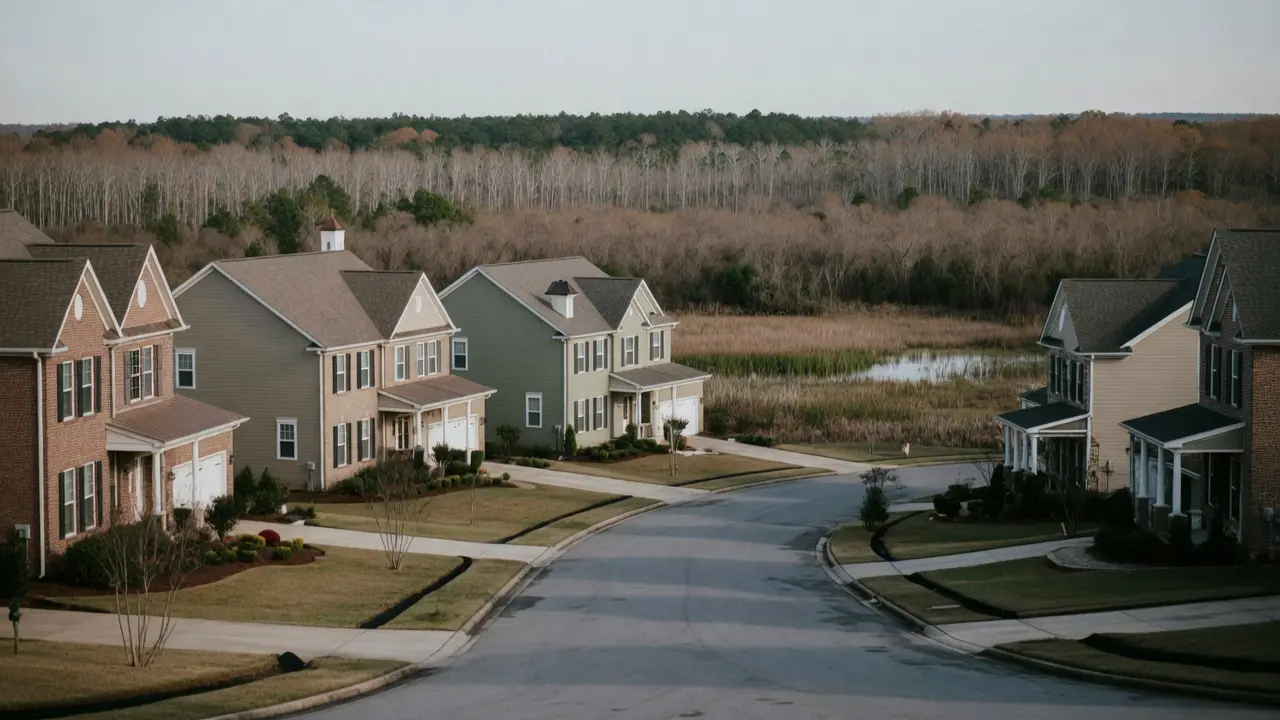
Chesapeake is a newer, sprawling market with a median build year near 1989, and large parts of it are still going up. That makes it more of an upgrade-and-replace market than a rescue one: systems reaching the end of a first full service life rather than houses that need rewiring.
Air conditioning is the busy one
Cooling costs more here than almost anywhere else in the region, and Chesapeake carries the highest advertiser competition for AC repair in Hampton Roads. Heat pumps dominate, and a heat pump that has been running since the house was built is usually the call we get in the first real heat of the year.
Big lots, long runs
Deeper lots mean longer water and power runs, detached garages and outbuildings, and more exterior lighting and hose bibs to freeze. Small outdoor jobs add up here in a way they do not in the older cities.
Newer does not mean sealed
Two-story homes from this era very often have rooms upstairs that never get cool. That is usually duct design or an envelope problem rather than a failing system.
Spread out, and mostly not on the water
Chesapeake is the least coastal of the seven in feel. Great Bridge, Western Branch and Deep Creek are inland suburban, so the salt-air corrosion that eats hardware in Virginia Beach and Norfolk is much less of a factor here. What replaces it is distance: larger lots, longer service runs, more detached garages and outbuildings, and more exterior work per house than anywhere else in the region.
What we run in Chesapeake
What homeowners here search for most
Plumbing
Chesapeake's median 1989 build year lands in the middle of the polybutylene window, so a large share of the city's subdivisions still run gray supply pipe on crimped fittings, while the southern end of the same city is on private wells where an identical pressure complaint is a completely different repair.
See plumbing →Heating & Cooling
Almost everything in Chesapeake is a heat pump because natural gas service never reached most of the city, and in the two-story houses built here from the late 1980s on the air handler sits up in the attic, which is why so many Chesapeake AC calls arrive as a ceiling stain rather than as a warm house.
See heating & cooling →Handyman
Handyman searches here run level with electricians, which fits a city new enough that the list is exterior and cosmetic rather than structural, and where most of the subdivisions built since the late 1980s come with an HOA that has an opinion about shutters, fence panels and deck boards.
See handyman →Electrical
A panel sized for a 1989 Chesapeake house was planned around one heat pump and an electric water heater, and in a city that is largely all electric with a rural southern end on private well pumps, adding a charger, a second system or a standby generator runs that panel out of space and capacity fast.
See electrical →We cover the other trades in Chesapeake too — all ten services. Not sure which one it is? Describe the symptom and we will work out the cause.
On the ground in Chesapeake
The 1989 median hides two very different Chesapeakes. South Norfolk, down along the Southern Branch of the Elizabeth River, was a separate city until 1963 and still has blocks of housing from the early 1900s. Grassfield and Edinburgh, at the other end, were mostly built after 2000, and Greenbrier, Great Bridge and Western Branch fall somewhere in between. Before you assume the median applies to your house, work out which Chesapeake you are actually in, because the answer changes what is worth replacing and what is worth repairing.
The other split is what your house is connected to. Water and sewer come from the city across the built-up boroughs, and out past Hickory and Pleasant Grove they do not. Natural gas service does not reach much of the city either, so a large number of Chesapeake homes run electric for heat, hot water and cooking.
Chesapeake also does not host a shipyard or a major installation the way Norfolk, Portsmouth and Newport News do. Plenty of households here work at one and drive to it, which changes when we can get into the house more than it changes what breaks in it.
Chesapeake questions
Straight answers for Chesapeake.
Who issues the permit for a water heater or heat pump changeout in Chesapeake?
Yes. Virginia's Uniform Statewide Building Code applies everywhere in the state, so replacing a water heater, changing out a heat pump or air handler, and any work on the panel all require a permit. In Chesapeake it is issued locally by the Department of Development and Permits, not by the state. Whoever does the work should be pulling it and scheduling the inspection that closes it out, so ask for the permit number before the job starts rather than after.
Does my Chesapeake house have polybutylene pipe?
Possibly, if it went up between the late 1970s and the mid 1990s, which covers a large part of Chesapeake. Polybutylene is gray plastic supply pipe, usually half inch or three quarter, joined with crimped metal or plastic fittings. Look at the pipe coming off the water heater, at the main shutoff, and where the line comes into the house. It fails at the fitting and it fails without warning, so finding it before it lets go is the whole point of looking.
Is my Chesapeake house on city water and sewer, or on a well and septic?
It depends which end of the city you are on. The built-up boroughs are on City of Chesapeake water and sewer, while a lot of the southern part, out toward Hickory, Blackwater, Fentress and Pleasant Grove, runs on private wells and septic. That changes the diagnosis for an identical symptom, because low pressure on a city main is one thing and low pressure on a well is a pump, a pressure tank or a switch. Wells and septic are also permitted through the health department rather than the city.
My yard floods after heavy rain but I am not in a flood zone. Why?
Because most of Chesapeake drains through open ditches rather than storm sewers. The southern half of the city was farmland on the edge of the Great Dismal Swamp and was drained that way on purpose, and neighborhoods built later kept the same system. When a ditch silts in or a driveway culvert plugs, the water sits on flat ground over a water table that is already close to the surface. The fix is usually grading, downspout runs and clearing the culvert, not a flood claim.
There is a brown stain on my upstairs hallway ceiling in the middle of summer. Is that the roof?
Usually not, if it is a two-story house and it is July. In Chesapeake homes built from the late 1980s on, the air handler is commonly in the attic, and in this humidity it pulls gallons of water a day out of the air. When the condensate drain clogs, the pan overflows and it shows up on the ceiling directly underneath, which is normally the upstairs hallway. A roof leak appears when it rains. A condensate leak appears when it is hot.
Can I add an EV charger or a standby generator to my 1990s Chesapeake panel?
Often not without work on the panel first. A panel sized for a 1989 or mid-1990s Chesapeake house was planned around one heat pump and an electric water heater. Because natural gas service never reached much of the city, a lot of those houses are already all electric, so a charger, a second system or a generator interlock runs the panel out of both space and capacity. It matters here because in an all-electric house on a well, an outage takes your water with it.
Nearby