
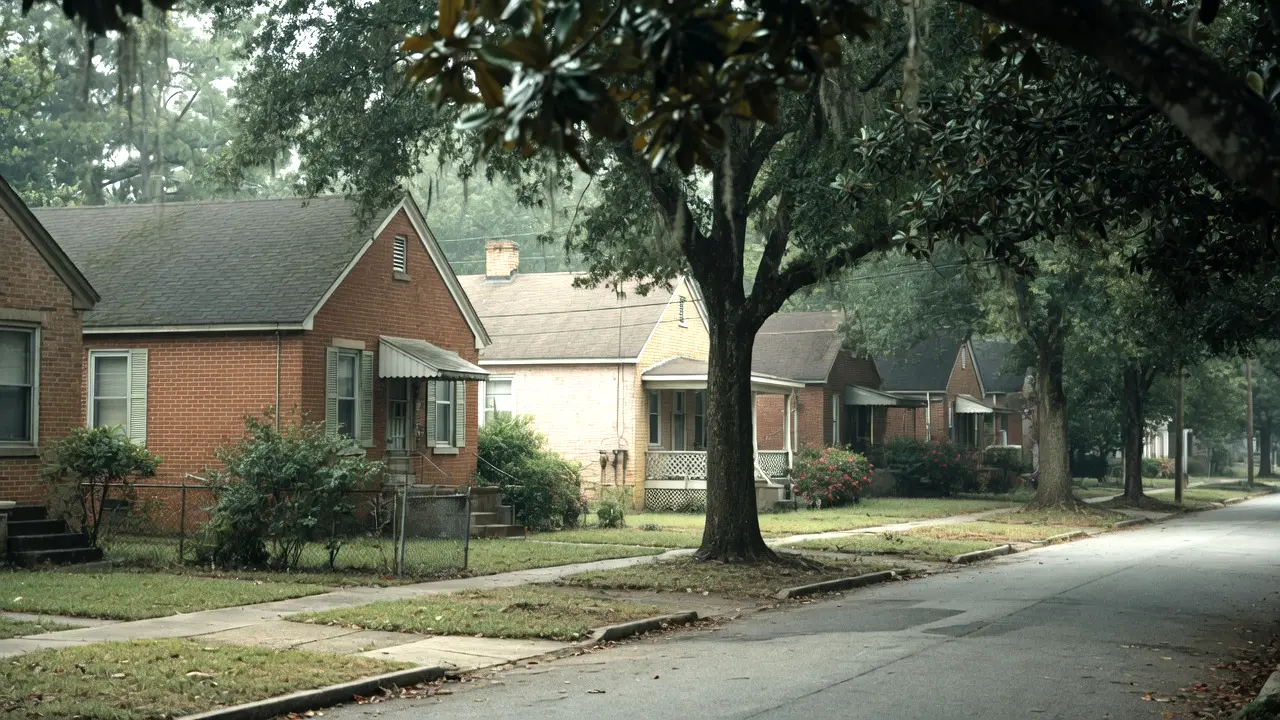
Home services in Norfolk
One number for plumbing, electrical, heating & cooling, roofing, handyman work and more in Norfolk.
Part of our Hampton Roads service area · median home here was built around 1964
What breaks in Norfolk
The age of the housing decides the work.
Norfolk has the oldest housing stock in Hampton Roads, with a median build year around 1964. Whole neighborhoods went up before modern electrical loads, before PVC drains and before anyone expected a house to run two air conditioners and an EV charger. That age is the single biggest thing that decides what breaks here.
Panels and wiring that predate the load
A 1960s house was wired for a fraction of what a modern kitchen draws. Breakers that trip under normal use, dead outlets on an old circuit, and undersized service are ordinary in Norfolk, and they are the reason electrical work is a bigger share of our calls here than in the newer cities.
Galvanised supply and cast-iron drains
Homes of this age often still have some original galvanised supply pipe or cast-iron waste line. Both fail from the inside out. Low pressure through the whole house, rust-coloured water and drains that keep backing up despite being cleared are the usual tells.
Roofs on their second or third life
A house built in the 1960s has been reroofed more than once. What we see most is not a dramatic failure but a pipe boot that has cracked and let water in quietly for a season.
The base city, and older housing to match
Naval Station Norfolk anchors the city and a lot of the surrounding housing was built to serve it, decades ago. That combination, service families moving on a cycle and a housing stock from the 1960s, is why so much of our Norfolk work is inspection-driven: something gets flagged, it needs fixing properly, and it needs fixing before a date someone else set.
What we run in Norfolk
What homeowners here search for most
Plumbing
Norfolk holds the region's largest concentration of original galvanized supply and cast iron waste line, and the mature tree canopy over Ghent, Larchmont and Colonial Place puts roots into clay and cast iron laterals that newer parts of Hampton Roads do not have.
See plumbing →Heating & Cooling
Central air was added to most Norfolk houses decades after they were built, so the duct runs sit in vented crawl spaces or unsealed knee walls, and the upstairs of a Cape Cod in Norview or Wards Corner quits in July long before the equipment does.
See heating & cooling →Electrical
A 1964 house was built around a 60 or 100 amp service, and depending on the year it can carry a panel type inspectors routinely write up or aluminum branch wiring, which is why an EV charger or a kitchen remodel in Norfolk usually starts as a service capacity question rather than a device question.
See electrical →Roofing
Sixty year old Norfolk houses are on their second or third roof, and the leaks usually start where a 1960s carport or Florida room addition meets the main house, because that near flat section and its wall flashing are what wind driven rain off the Chesapeake Bay finds first.
See roofing →We cover the other trades in Norfolk too — all ten services. Not sure which one it is? Describe the symptom and we will work out the cause.
On the ground in Norfolk
Norfolk is not one build era, it is four inside one city. Ghent, Freemason and Colonial Place go back to the early 1900s, with plaster walls, old wiring buried behind newer runs, and porches that have been rebuilt more than once. Norview, Ingleside and Wards Corner are 1950s and 1960s ranches and Cape Cods, and that is the stock the citywide median comes from. Ocean View and Willoughby are former summer cottages that were winterized and added onto, so the systems in them were sized for a house that no longer exists. East Beach is about twenty years old. A median build year tells you the middle of the range, not your street.
That matters more than it sounds. Two houses on the same Norfolk block can need opposite work, and one house often spans three decades by itself, because a carport was enclosed in the 1970s, the kitchen moved in the 1990s and the bathroom was redone last year. So the useful question here is rarely how old the house is. It is how old the thing in front of you is, and whether whoever last touched it pulled a permit.
Norfolk questions
Straight answers for Norfolk.
Which jobs need a trade permit in Norfolk, and what happens if one was never pulled?
Yes to both. Norfolk requires a trade permit for a water heater changeout, for a panel or service upgrade, for an HVAC changeout, and usually for a full reroof. The permit is pulled by the contractor doing the work, and it should be open before the work starts rather than filed after. It also lands in the property record, which is where it resurfaces later: unpermitted work on an older Norfolk house tends to get flagged during an inspection years afterward, and unwinding it then is expensive.
Does being in a Norfolk flood zone change how a repair gets done?
Once the job gets big, yes. If your home sits in a FEMA special flood hazard area, which covers a lot of Ocean View, Willoughby, Larchmont and the streets around The Hague, the substantial improvement rule applies: when the cost of the work reaches about half the structure's value, the whole building has to be brought up to current flood requirements. That can mean raising mechanical equipment, or more. Check your zone before you scope a large renovation, not during it.
Why is there water under my house when it has not rained?
In Norfolk the tide is often the source, not the rain. The land here is slowly sinking while the water rises, so streets and yards near the Lafayette and Elizabeth rivers take water on clear days at high tide, and crawl space vents sit low enough to let some of it under the house. The fix is usually grading, vapor barrier and drainage work rather than a pump. If the water shows up on a schedule instead of after a storm, mention that when you call.
How do I find out what year my Norfolk house was built and what work has been permitted on it?
The city publishes it. Norfolk AIR, the city's online address lookup, returns year built, zoning, historic district status, flood zone and the permit history filed on the property. On a house from the 1960s that permit history is the useful part, because it tells you what has already been replaced and what is still original. Bring what you find to the conversation and it shortens the diagnosis considerably.
I live in Ghent. Does that limit what I can replace?
Outside, yes. Ghent is a locally designated historic district, and exterior changes visible from the street, including windows, siding, roofing material and porch detail, go through Norfolk's historic district review for a certificate of appropriateness before the work happens. Interior work is not affected. In practice that means an exterior job in Ghent, Freemason or the other designated blocks needs review time built into the schedule and a material choice that will actually be approved.
Is it worth repiping a 1960s Norfolk house, or should I just fix the leaks?
It depends on what the pipe is, and in Norfolk that is worth establishing before you spend anything. Galvanized steel supply rusts closed from the inside, so patching one section moves the pressure problem to the next section and you pay twice. Copper from the same era often has years left in it. Cast iron waste is a separate question again, and a camera in the line answers it faster than guessing. Identify the material first, then decide.
Nearby