
The list every house carries, cleared in one visit
Most houses carry a list. The TV that never got mounted, the closet door off its track, the bathroom fan that rattles, the garage door that opens a foot and stops. None of it is an emergency and all of it is annoying. One visit clears the list.
Elkton, MD · Hampton Roads, VA · Pittsburgh, PA · South Jersey, NJ · Southeastern PA
When it cannot wait
Jobs that shouldn't wait until next week
Most handyman work is a scheduled visit at a time that suits you. A few things aren't. If one of these is happening at your house, say so on the call and we'll treat it that way.
The garage door won't open and the car is stuck inside
You can't get to work. Dead safety sensors, a snapped cable, an off-track roller and a failed opener all look the same from the driveway and are four different repairs.
An exterior door or deadbolt that won't latch
The house isn't secure tonight. Usually a hinge screw that pulled out of the jamb, a strike plate sitting a quarter inch off, or a lock cylinder that finally gave up. All three are adjustments, not a new door.
A toilet running non-stop in the only bathroom
It's wasting water by the hour and it will show up on the bill. A flapper, fill valve or handle swap stays inside handyman scope because nothing behind the wall changes.
A grab bar or handrail needed before someone comes home
Hospital discharge dates don't move. A grab bar has to land in framing or a rated anchor to hold an adult's weight, which is exactly why it's worth a visit rather than a Saturday attempt.
It might not be what you think
This might actually be a different problem
Several of the most common handyman calls are symptoms, not causes. Fixing the symptom without the cause means paying twice. Here's how to tell the difference before you book anything.
A door that used to close fine and now sticks
Doors don't start binding on their own. When one begins catching at a top or bottom corner over a few months, and especially if a second door in the house does the same thing, the frame is out of square because the house has moved. Planing the door hides it for a season and it comes back.
Foundation RepairA brown stain spreading on the ceiling
Two causes, two different crews. Directly under a bathroom or a laundry, suspect a supply line, a shower pan or a toilet flange. Under attic space or near a chimney or vent stack, suspect the roof. Painting over a stain before the source is found means painting it twice, so we find the source first.
RoofingAn outlet that's warm, discolored or dead
Heat at a receptacle means a connection is failing behind the wall, and swapping the outlet can bury the evidence without fixing anything. Half the house going dark, or a breaker that won't reset, is the same conversation. This one never stays in handyman scope.
ElectricalA soft or spongy floor near a toilet, tub or dishwasher
The floor is the last thing to fail, not the first. Something has been leaking underneath long enough to rot the subfloor, which takes months. The plumbing gets fixed first, then the subfloor, then the finish floor. Doing it in any other order is money thrown away.
PlumbingOne room that never gets comfortable
Hold a hand at the register. Weak airflow points at ducts, a filter or the equipment. Strong airflow in a room that's still hot points at the windows and the envelope, which is very common in the upstairs rooms of two-story houses. Same complaint, two different fixes.
Heating & CoolingA garage door that's suddenly heavy to lift by hand
Pull the release cord and lift the door to waist height. A balanced door stays where you leave it. A heavy one means the spring has lost tension or broken, and the opener is now carrying weight it wasn't built for.
Contact SharplineCommon questions
Straight answers.
What counts as a handyman job?
Three tests. If the work needs a permit, it isn't a handyman job. If it's a like-for-like swap at a connection that already exists and works, it usually is. And if it involves gas, refrigerant, the breaker panel or meter, the main water shutoff, the main sewer line or anything holding weight, it goes to a trade regardless of size. Swapping a faucet is handyman work. Moving the drain it sits over is not.
Do you repair garage door springs?
Everything else on a garage door is standard handyman work: safety sensors, remotes and keypads, rollers, hinges, track, bottom seal, chain tension and opener replacement. Spring and cable work is the one part of that door that stores enough energy to seriously injure someone, so we state whether it's in or out on this page rather than finding out in your driveway.
How much does a handyman visit cost?
What we can say is that the cost per job drops sharply when several items are handled on one visit, because most of the expense is the trip and the setup.
Can you do several jobs in one visit?
Yes, and that's the right way to book us. Walk the house, write everything down, including the things you've stopped noticing. Six to twelve items is a normal list. Send it before the visit so the truck arrives with the right parts instead of making a hardware run on your time.
Which areas do you cover?
Five markets. Elkton and the rest of Cecil County, Maryland. Hampton Roads, Virginia, including Virginia Beach and Norfolk. Pittsburgh, Pennsylvania. South Jersey, including Cherry Hill and Haddonfield. Southeastern Pennsylvania, meaning Delaware County and the Philadelphia suburbs around Havertown and Media. Availability by service varies by market, so tell us your town when you call.
What happens if the job turns out to be bigger than a handyman visit?
We tell you at the house, explain which of the three tests it failed, and move it to the team that handles that work. You don't get handed a competitor's phone number and you don't start the search over. That handoff is the reason this company runs ten trades instead of one.
Can you mount a TV on brick or above a fireplace?
Brick, yes. The anchors go into the brick face itself, never the mortar joints, which will not hold a cantilevered mount. Above a fireplace needs two checks first: how hot the mantel area actually gets in use, and how high the screen ends up, because most fireplace mounts put a TV well above comfortable viewing height. We'll tell you if a different wall is the better answer.
Everything we handle
Handyman we're called out for
Open any of these for the detail. If you would rather just describe it to a person, call 610-550-3248.
Sharpline runs handyman services in five markets: Elkton, Maryland; Hampton Roads, Virginia; Pittsburgh; South Jersey; and the Philadelphia suburbs of Delaware County in southeastern Pennsylvania. Same company, same number. If something on your list turns out to be a plumbing job or an electrical job, it doesn't become your problem to solve. It moves to another team inside the same company.
That last part is the whole point of this page. Every handyman company stops at a line drawn by building code. Most of them stop by handing you a different company's phone number. Below, we've written out exactly where that line sits, so you know before anyone gets in a truck.
What can you get mounted or hung in one visit?
Mounting is the single most booked handyman job, and almost all of it comes down to finding real structure behind the finish. Drywall anchors hold a picture frame. A 65-inch TV needs studs, a masonry sleeve anchor in brick, or blocking added behind the wall. We check what's back there before anything gets drilled.
- TV wall mounting, including tilt and full-motion arms
- TVs over a fireplace, where heat and mount height both need checking first
- Mirrors, floating shelves and heavy artwork
- Curtain rods, blinds and shades
- Closet organizer and shelving systems
- Bathroom hardware: towel bars, robe hooks, toilet paper holders
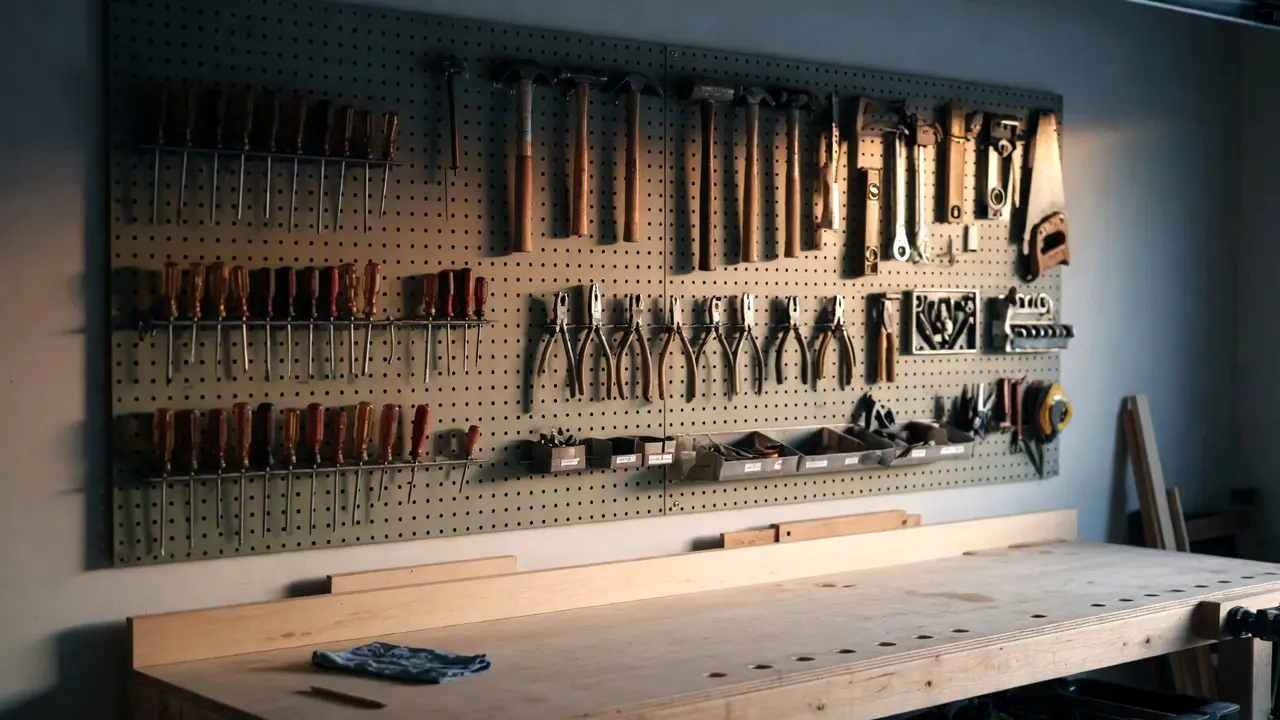
- Garage wall racks, pegboard and overhead storage
- Wall-mounted headboards, coat rails and drop zones
Furniture and flat-pack assembly
Flat-pack furniture is designed to be assembled once, correctly. Most of the calls we get are for the second attempt. If a piece is going to hold weight or hold children, it also needs anchoring to the wall, which is the step most instructions bury on the last page.
- Wardrobes, dressers and chests, anchored to the wall
- Bed frames, bunk beds and loft beds
- Desks, office chairs and standing desks
- Bookcases and shelving units
- Patio furniture, grills and gazebos
- Treadmills and home gym equipment
- Basketball hoops and play sets
- Anything that arrived in three boxes and one bag of hardware
Why won't my door close properly any more?
Most doors that stop closing have moved, not broken. A hinge screw has stripped out of the jamb, the strike plate has drifted out of alignment, or the slab has swollen in summer humidity and will shrink back in January. All three are adjustments. Replacing the door usually fixes nothing, because the frame is what changed.
- A door that sticks, rubs the frame or won't latch
- Sagging doors re-hung with longer screws into the framing
- Strike plate and hinge adjustment
- New deadbolts, smart locks and handlesets on existing prep
- Bifold and sliding closet doors off their track
- Screen doors, screen re-mesh and closer replacement
- Weatherstripping, door sweeps and thresholds
- Cabinet doors that won't stay shut, plus drawer slides and soft-close hinges
Why does my garage door open a foot and then stop?
Nine times out of ten it's the safety sensors. They sit about six inches off the floor on each side of the opening, and a bumped bracket, a dusty lens or a pinched wire will reverse the door every time. Here's the test that tells you the difference: pull the release cord, lift the door by hand to waist height and let go. A balanced door stays put. A heavy door that drops means the spring has lost tension or broken, and the opener has been doing work it was never sized for. Garage door repair is one of the most searched jobs on this page, and most of those calls are not the door itself.
- Safety sensor alignment, cleaning and wiring
- Remotes, keypads and wall buttons reprogrammed
- An opener that hums but doesn't move
- Chain and belt tension, sprockets and gear kits
- Rollers, hinges and bent track sections
- A door off its track
- Bottom weather seal and side stop moulding
- Opener replacement where an outlet is already in place
- A loaded spring holds enough energy to break bones, so this page says in or out rather than leaving it vague.
Can a handyman change a light fixture or a faucet?
Yes, when it's a straight swap. The handyman scope is a like-for-like replacement: a plumbing fixture where the supply, drain and vent piping don't change, or a switch, dimmer, standard 15 or 20 amp receptacle, light fixture or ceiling fan on a box and circuit that already exist. Whether even that swap needs a permit depends on where the house is. Maryland, New Jersey, Pennsylvania and Virginia each write their own exemptions, and some townships add rules of their own, so we check the local rule before the work instead of assuming one state's list covers every market. If your town wants a permit for the swap, it stops being handyman work. Anything that moves a pipe or adds a wire sits on the other side of that line everywhere.
- Light fixtures, pendants and vanity lights
- Ceiling fans where a fan-rated box is already in place
- Switches, dimmers, outlets and USB receptacles
- Kitchen and bathroom faucets
- Toilet replacement onto the existing flange
- Garbage disposal swaps
- Shower heads, tub spouts and diverters
- Bathroom exhaust fans where the duct and wiring stay put
- Battery and low-voltage thermostats on the same wires
- Smoke and carbon monoxide detectors, and video doorbells on existing wiring
The small repairs that never make it onto a list
These are the jobs everyone lives with. Individually none of them justify a call. Together they're an afternoon, and clearing eight of them in one visit is the cheapest way to use a handyman.
- Doorknob holes, nail pops and hairline drywall cracks
- Re-caulking tubs, showers, sinks and countertops
- Cracked or missing tile grout
- Squeaky stairs and floorboards
- Loose stair balusters, newel posts and handrails
- Windows that stick, and window locks that don't catch
- Vinyl planks and laminate boards lifting at a seam
- Baseboard, trim, casing and quarter round
- A toilet that rocks on the floor
- Mailbox posts, house numbers, address lights and fence gates that drag
What should get fixed before storm season and the first freeze?
Two windows in the year matter. The first is before the big wind. In Hampton Roads that means before hurricane season opens in June; in the other four markets it means before the next severe storm. Either way it's anything the wind can take hold of: loose shutters, unsecured downspouts, a gate that won't latch, torn screens, and clogged gutters that send water down the wall instead of away from it. The second is before the first hard freeze, in every market we cover, and it's the outdoor spigots, because a split hose bib doesn't show itself until the thaw. In a basement house, which describes much of the older housing in Pittsburgh and the Philadelphia suburbs, look for the spigot's own shutoff valve on the inside of the wall and close it first.
- Clearing gutters and re-strapping downspouts
- Re-securing shutters, trim boards and loose siding pieces
- Storm door and window screen repair
- Hose bib covers and outdoor spigot checks before the freeze
- Weatherstripping doors and windows before the heating bill arrives
- Dryer vent cleaning
- Deck and porch board replacement, plus railing tightening
- Fence pickets, posts and gate hardware after a storm
Aging in place: grab bars, handrails and lever handles
Small hardware changes keep people in their own homes. The work is straightforward, but the anchoring is not optional. A grab bar screwed into tile and drywall alone will pull out under real weight, which is the exact moment it's needed. We locate framing or add blocking behind the wall. Exterior steps count as much as the stairs inside, and on a sloped lot, which describes a lot of houses in Pittsburgh, there are usually more of them.
- Grab bars in the tub, shower and beside the toilet
- Handrails on interior stairs and porch steps
- Lever handles replacing round doorknobs
- Comfort-height toilet swaps and raised seats
- Brighter fixtures and motion-sensor night lights on existing wiring
- Threshold ramps and transition strips at doorways
- Non-slip strips and a fitted shower seat
- A full walk-in shower conversion or a permanent ramp is a build, not a handyman visit. We'll say so.
Punch lists, turnovers and pre-listing repairs
Turning apartment units between tenants is work Sharpline already does on the commercial side of the business. One walk-through, one list, one visit, one invoice. That process moves onto a single house without any change. It's the same job at a smaller scale, and it's why a fourteen-item list doesn't scare anybody here.
- Home inspection repair addendum items before a closing date
- Pre-listing repair sprints against a hard deadline
- Rental turnover for an owner who moved and kept the house
- Move-in punch lists on a new build
- Landlord make-ready between tenants
- One visit that clears eight small things instead of eight appointments
- Owners and managers running more than one property: see property maintenance for owners & managers
Where does handyman work stop and a trade job start?
Three tests decide it, and none of them are about how big the job looks. Test one, the permit test: if the work needs a permit, it isn't handyman work. Test two, the connection test: a like-for-like swap at a connection that already exists and already works usually is. The moment new wire is run, a circuit is added, a pipe is cut or rerouted, or a new drain or vent penetration is made, it leaves handyman scope. Test three, the hazard test: gas, combustion, refrigerant, the service panel or meter, the main water shutoff, the main sewer line (or the well and septic system on the Cecil County houses that aren't on town water and sewer), or anything holding weight goes to a trade every single time, however small it looks. What's different here is what happens at that line. Most handyman companies give you somebody else's number. Sharpline moves the job to another team under the same roof.
- WE DO: Swap a light fixture, ceiling fan, switch, dimmer or standard outlet onto wiring and a box that already exist.
- WE ROUTE: Add an outlet, run a new circuit, upgrade the panel, wire an EV charger, or look at an outlet that's warm or scorched. Goes to Electrical.
- WE DO: Swap a faucet, toilet, shower head or garbage disposal onto the supply and drain that are already there.
- WE ROUTE: Cut, solder or move pipe, add a drain or vent, replace a water heater, or clear a main sewer line. Goes to Plumbing.
- WE DO: Change a filter, replace a vent cover, or swap a thermostat onto the same wires.
- WE ROUTE: Anything with refrigerant, a gas connection, a flue, or an air handler that stopped cooling. Goes to Heating & Cooling.
- WE DO: Patch a doorknob hole, fix nail pops, re-caulk a tub, touch up a scuff.
- WE ROUTE: A stained or sagging ceiling, a crack that keeps returning in the same spot, or a full room repaint. Goes to Painting & Drywall.
- WE DO: Re-hang a sagging door, move a strike plate, fit a new deadbolt, re-mesh a screen.
- WE ROUTE: Replace the door or window unit itself, or deal with cracked glass and failed seals. Goes to Windows & Doors.
- WE DO: Clear gutters, re-strap a downspout, re-secure a loose shutter from a ladder.
- WE ROUTE: Anything on the roof plane. Leaks, missing shingles and pipe boots. Goes to Roofing.
- WE DO: Re-glue a lifting vinyl plank, replace a threshold strip, quiet a squeak.
- WE ROUTE: A floor that feels soft underfoot, or tile cracking along the same line. Goes to Tile & Flooring, usually after Plumbing or Foundation Repair.
- WE DO: Hang a grab bar into framing, add a handrail to existing studs, tighten a loose railing.
- WE ROUTE: Cutting a joist, removing a wall, sistering a girder, or anything carrying load. Goes to Foundation Repair.
- WE DO: Extend a downspout, reset a splash block, clear a window well.
- WE ROUTE: Water coming through a basement wall or cove joint, a problem that turns up far more in the basement houses of Pittsburgh, South Jersey and southeastern PA than on the slab and crawl-space houses common in Hampton Roads. Goes to Basement Waterproofing.
Putting it back the way it was
When a job is bigger than a handyman visit, it stays with us.
Where we do this
Handyman in your area
Write the whole list, including the things you've stopped noticing, and call 610-550-3248.
If two items on it turn out to be a plumbing job, you still only made one call.