
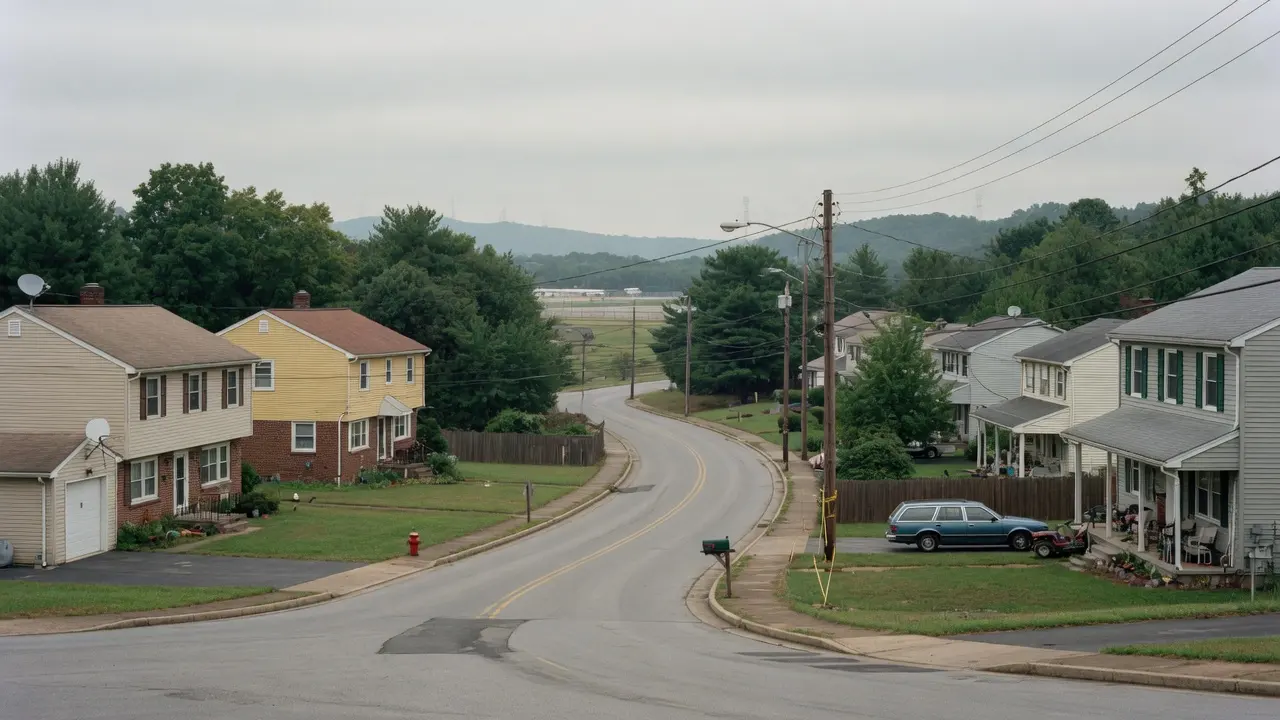
Electricians, HVAC and handyman work in Moon Township
One number for plumbing, electrical, heating & cooling, roofing, handyman work and more in Moon Township.
Part of our Pittsburgh service area · median home here was built around 1976
What breaks in Moon Township
The age of the housing decides the work.
Point-of-sale dye tests are common across Allegheny County, and in most of those municipalities the seller hires a licensed plumber to run one. Moon is in the minority where the authority does it itself. The Moon Township Municipal Authority is not an ALCOSAN customer. It treats the township's wastewater at its own plants, and the airport's, and when a house here is sold the ordinance sends an MTMA inspector to the property to perform the test. A licensed plumber appears in that ordinance at the repair stage, not the testing stage. Underneath the rule sits a stock with almost no prewar in it: a median build year of 1976, and only 873 of 10,616 units standing before 1950.
The Authority runs the test, not a plumber you hire
The seller applies at least 14 days before the sale date, and the person who shows up works for the Authority. The ordinance lets that inspector run as many tests as he or she considers necessary, dye, smoke or air, and lean on MTMA's own main-line televising, so there is no shopping a second opinion. MTMA withholds the municipal lien letter until a document of certification, or a temporary one, has been issued, the step that holds a closing.
What the ordinance names is a decision, not a failure
The 1970s put up 2,062 of Moon's housing units, the 1960s another 1,732 and the 1950s 1,413, while 4,536 date from 1980 or later. That is a young stock by Allegheny County standards, and it shows in what the sewer ordinance actually names as the violation: maintaining a connection of a roof drain, downspout or french drain to the sanitary sewer. Not a collapsed line, not a material that gave out. A connection somebody made on purpose, and the ordinance makes keeping it the offense rather than making it.
The Authority names the problem, the Township names the outlet
Cutting a downspout off the sanitary line leaves the water needing somewhere else to go, and that half is the Township's ordinance rather than MTMA's. Clean water from foundation drains, footing drains and crawl space pumps is an allowed discharge to Moon's storm system. Roof drains and sump pumps are to reach infiltration or vegetative BMPs wherever feasible, meaning ground that soaks the water up or planting that takes it up. Unless the Township approves otherwise, nothing off a roof or driveway goes to the street, curb or sidewalk.
Moon asks what the work is standing on
A residential permit here comes with a soils affidavit attached. The packet wants either an Undisturbed Soils Affidavit or, where the structure sits on engineered or disturbed soil, a Soils Compaction Certification Affidavit signed by a geotechnical engineer confirming the fill under the footings and foundations was compacted. There is an enforcement side to match it. Where the Code Official decides an existing excavation, retaining wall, embankment or fill has become a hazard, the owner repairs, rebuilds or removes it on written notice.
What we run in Moon Township
What actually gets called in the most here
Electrical
Electrical is the trade Moon keeps for itself. The permit application, the worksheet and the fee check go to the Township, while plumbing goes to the county. Every applicant settles workers compensation first, either an affidavit of exemption or a certificate naming Moon Township as a certificate holder, and the electrical fee is due when the application goes in rather than at pickup.
See electrical →Heating & Cooling
Moon puts a clock on noisy outdoor work. Where the Township Building Code Official finds the noise disturbs the public, construction machinery and equipment such as saws and drills used outside a structure in conjunction with work requiring a building permit are barred from 9 p.m. to 7 a.m. Monday through Saturday, and all day Sunday and federally designated legal holidays, with exceptions for life-or-property emergencies and for work the Code Official clears as quiet enough. That reaches the cutting and demolition end of a job harder than a condenser swap.
See heating & cooling →Handyman
Moon has adopted the 2009 International Property Maintenance Code as the standard an existing house is held to, and separately every sale of a property with a building on it needs an MTMA certification before the lien letter issues. The MTMA side is one item: where the storm water goes. A downspout taken off the sanitary line and given a lawful outlet is small work carrying a closing date.
See handyman →We cover the other trades in Moon Township too — all ten services. Not sure which one it is? Describe the symptom and we will work out the cause.
On the ground in Moon Township
Two whole-house questions have Moon-specific answers. Lead is one: MTMA states there are no lead service lines anywhere on its system, to any home, school or business, which puts any lead in a Moon house inside the house's own plumbing rather than in the line from the street. Hardness is the other. MTMA measured 123 ppm on average across 2025, with a low of 89 and a high of 158, and its own published scale starts the hard band at 120, so scale on a water heater or a fixture here accumulates slowly rather than aggressively. Mine subsidence stays a parcel question rather than a township one. DEP's Allegheny County map shows only scattered undermined patches inside Moon, and DEP says on the map itself that it cannot verify the accuracy or completeness of that information, so an unshaded patch is not a clearance. It is a reason to check the parcel.
MTMA is also bigger than the township it is named for. It runs eleven pumping stations and 215 miles of sanitary main, sewers Crescent Township and South Heights Borough alongside Moon, and sells wholesale treatment to Robinson, North Fayette and Findlay and to Pittsburgh International Airport. On your own lot it draws a line. MTMA maintains the lateral from the main to the property line; the service line from the property line into the house is the owner's, along with every pipe inside it. That line is where a dye test result stops being a finding and becomes somebody's bill.
Moon Township questions
Straight answers for Moon Township.
Do I need a dye test to sell my house in Moon Township?
Yes, if there is a building on the property. Moon's ordinance makes it unlawful to sell without first delivering a document of certification from the Moon Township Municipal Authority, and the seller has to apply at least 14 days before the sale date. MTMA's fee schedule lists the dye test at $50 and the municipal lien letter at $25. Newly built homes are exempt before their first sale, and vacant lots with no structure are not tested. A passing test is reported to stay valid for two years, so a house that sold recently may not need a new one. Confirm that with MTMA.
What happens if my Moon Township dye test fails before closing?
Two routes get a sale closed, and both are MTMA's to grant rather than yours to elect. The ordinary one is a retest: the illegal discharge comes out, the system is tested again, and the fee is paid again before each retest, so a second failure costs twice. If the repair would take long enough to create a hardship, MTMA may at its own discretion issue a temporary certification against an executed contract with a registered, licensed plumber plus a deposit equal to that contract posted as surety, forfeited to the extent MTMA needs it to finish the work. If weather prevents testing altogether, the buyer signs an acknowledgment taking on anything found later at their own expense, with testing inside 30 days. Note which party carries the risk in each: in the first the seller does, in the second the buyer does.
Where is my sump pump or downspout allowed to discharge in Moon Township?
Not into the sanitary sewer, and not onto the street unless the Township approves it. The lawful outlets are ground and planting: an infiltration or vegetative BMP wherever that is feasible, plus clean water off foundation and footing drains and crawl space pumps, which the storm system will take. Re-routing a line is often permit work. Moon requires a grading permit for anything that diverts or otherwise affects the flow of stormwater, or that installs a drain pipe, ditch or culvert, and the exemptions are narrower than they look. One covers an excavation no deeper than five feet that stays under 20 percent of the site, 5,000 square feet and 250 cubic yards. A separate table exempts single-family house lots by size: 100 cubic yards under 12,000 square feet, 200 up to 30,000 and 250 above that. Which line applies depends on the lot, so the 250 is not a safe assumption.
Moon bills a stormwater fee. Does it change when I sell, or when I pave?
It does not prorate at a sale, so buyer and seller settle it at closing, and unpaid amounts become a lien on the property. Paving is the part people expect to move it, and on a house it does not. The unit is an Equivalent Residential Unit, which Moon defines as 3,800 square feet of impervious cover, but a single-family detached property is billed a flat one ERU and a single-family attached or multi-family dwelling unit half an ERU, whatever the driveway ends up looking like. Measured impervious area only sets the bill on property that is not single-family residential. The definition is still broader than people expect there, because compacted gravel and permeable pavers both count as impervious, so it moves the number on a commercial lot, a condominium plan or a parcel carrying two houses.
Nearby