
Home services in Hampton
One number for plumbing, electrical, heating & cooling, roofing, handyman work and more in Hampton.
Part of our Hampton Roads service area · median home here was built around 1974
What breaks in Hampton
The age of the housing decides the work.
Hampton sits in the middle of the region by age, with a median build year around 1974, and low and flat by geography. Much of the city drains slowly, which shows up in crawl spaces and around foundations after a heavy rain far more than it does further inland.
Water that does not leave
Flat ground and a high water table mean standing water under houses is common after storms. The fix is usually drainage, grading and getting downspouts away from the foundation, not a dramatic structural repair.
Mid-70s plumbing
Houses from this era are old enough for original fixtures and water heaters to be well past their span, but new enough that the supply runs are often still serviceable. That makes a lot of Hampton plumbing work targeted rather than wholesale.
Storm season on the roof
Between June and November it is worth knowing the condition of your roof before a named storm rather than after one.
Langley, and water on three sides
Joint Base Langley-Eustis and NASA Langley sit inside a city that is surrounded by water on three sides and barely above it. The flat, low ground is why drainage problems dominate here, and the base is why a lot of the calls come with a date attached. Both change how we schedule rather than what we fix.
What we run in Hampton
What homeowners here search for most
Plumbing
Hampton's lots are flat and the water table sits close to the surface, so a sewer lateral leaves the house with almost no fall and runs shallow through damp soil the whole way to the main, and houses at or just before Hampton's median build year can still be on a fiber lateral rather than PVC, which is why so many calls here open as a slow drain rather than a burst pipe.
See plumbing →Handyman
Hampton's stock is mostly modest single-family houses about fifty years old, a lot of them ranches, and five decades of wind-driven rain off open brackish water leaves a long list of small exterior items behind: soffit and fascia, storm door hardware, exterior doors that no longer latch, railings and steps, crawl space vents and screens, so the handyman list here is usually the whole job rather than the opening move on a bigger one.
See handyman →Electrical
A Hampton house at the median build year lands in the narrow window where aluminum branch circuits were still going into walls and Federal Pacific and Zinsco panels were still being sold, which puts the city's electrical work in a different category from Norfolk's undersized 1960s service or Suffolk's mid-90s stock: here it is usually a panel and device question, not a rewire.
See electrical →Heating & Cooling
In Hampton the condenser usually sits on a pad a few inches above ground that stays damp, and the air handler and ducts sit in a crawl space over that same wet ground, so cooling problems here tend to start as corrosion, wet insulation and duct loss under the house rather than as a compressor that simply wore out.
See heating & cooling →We cover the other trades in Hampton too — all ten services. Not sure which one it is? Describe the symptom and we will work out the cause.
On the ground in Hampton
Hampton is a small city by land area, and it still holds three different repair lists.
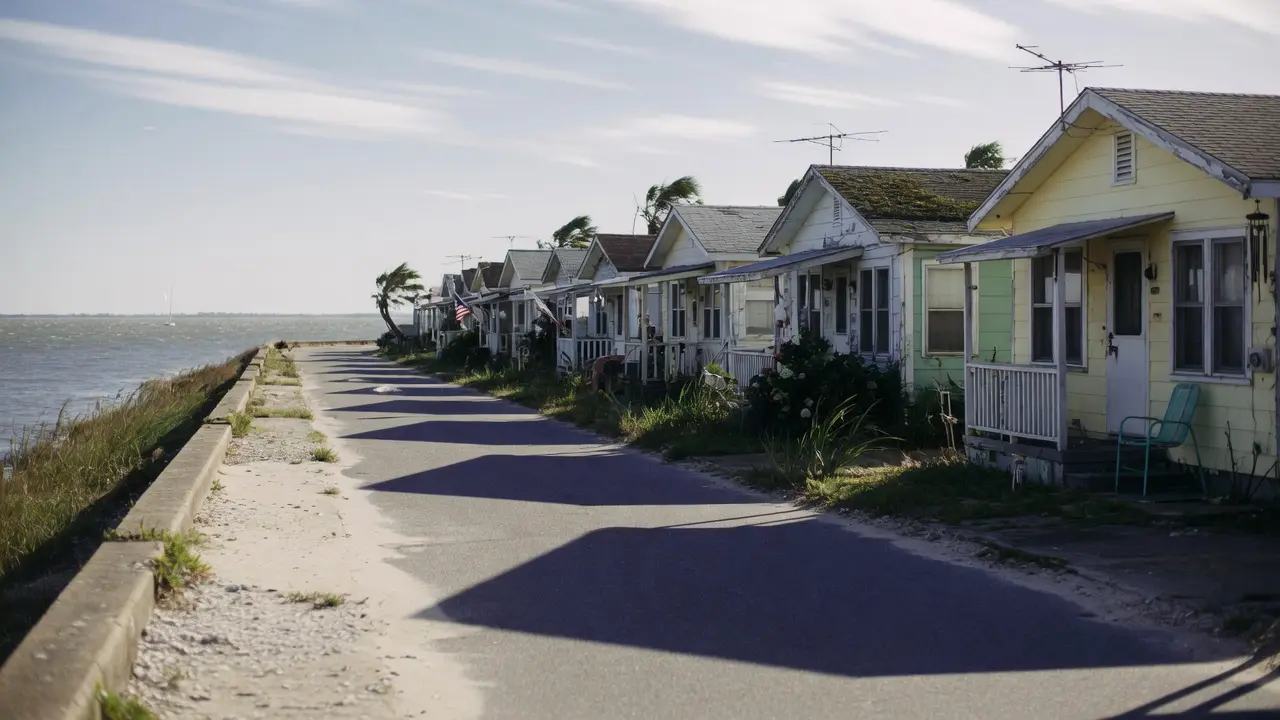
On the water side, Buckroe, Grandview, Salt Ponds and Fox Hill deal with flood elevation, corroded exterior metal and wind coming off open water. The older river and harbor neighborhoods, Olde Wythe, Wythe and Phoebus, run older than the citywide median suggests, with early twentieth century houses whose systems have been replaced piecemeal across decades rather than all at once, so what you find behind a wall there is rarely one consistent vintage. Inland, the subdivisions off Mercury Boulevard and around Hampton Roads Center sit closest to that median year, and those are the houses where the original heat pump, the water heater and the panel all come due within a few years of each other.
Same city, three different first questions. When you call, tell us the neighborhood and how the problem shows up, whether that is a wet floor, a slow drain, a tripping breaker or a stain, and we can usually work out which trade is actually involved before anyone comes out.
Hampton questions
Straight answers for Hampton.
Who supplies the water in Hampton, and who owns the pipe in my yard?
Hampton's drinking water comes from Newport News Waterworks, not from a Hampton-run utility, and wastewater is treated regionally by HRSD while the city maintains the sewer mains under the street. The water line and sewer lateral between the main and your house belong to you. That split decides who you call: pressure or metering at the curb is a utility question, and everything past it is ours. Private wells are a Suffolk story, not a Hampton one.
What does Hampton require a permit for, and why does a flood zone change it?
Yes, most of that work needs a permit in Hampton. The city's codes compliance office issues building, electrical, plumbing and mechanical permits under the Virginia Uniform Statewide Building Code, and water heater replacements, panel changes, service upgrades and reroofs generally sit inside it. There is a second step here that surprises people: if the property is in a mapped flood zone, the application also gets a floodplain review, and that can change the scope before any work starts.
Is my house in a flood zone, and does that change how a water heater or AC unit gets replaced?
Check FEMA's flood map service or your flood insurance declarations page first, because a mapped zone does change how replacement equipment goes back in. In a special flood hazard area, floodplain rules can require mechanical equipment to be set above the base flood elevation instead of back where it was. Even where nothing requires it, an outdoor unit sitting low in Grandview or Fox Hill will meet salt water in a bad nor'easter, and raising it costs less than replacing it twice.
There is water under my house and it has not rained. What is that?
That is usually groundwater rather than anything coming off the roof. Hampton sits only a few feet above sea level and the water table follows it, so in the lower neighborhoods the ground under a crawl space can be wet in a dry week and wetter on a high tide. Separate it from storm water early, because the answer is a liner, a sump and a sealed crawl space, not regrading the yard.
Why do my drains slow down or back up during heavy rain or at high tide?
Flat ground and a shallow lateral are usually the reason. A Hampton lateral leaves the house with very little fall and runs through soil that spends a lot of the year saturated, so groundwater works into old joints and the line loses what little capacity it had. Houses from the early 1970s and earlier can also still have a fiber sewer lateral, which softens and deforms with age. A camera down the line settles which of the two you have.
Does salt air matter in Hampton the way it does at the oceanfront?
In the waterfront neighborhoods yes, and inland much less. Buckroe, Grandview, Salt Ponds and Fox Hill sit on brackish water with open fetch across the Chesapeake Bay and Back River, and condenser coils, exterior light fixtures, hinges, fasteners and garage door hardware corrode noticeably faster there. The subdivisions off Mercury Boulevard and around Hampton Roads Center are far enough back that exterior hardware ages closer to normal. It is worth knowing which side of the city you are on before you buy a replacement part.
Nearby