
Roofers, plumbers and electricians for Cherry Hill's 1960s housing
One number for plumbing, electrical, heating & cooling, roofing, handyman work and more in Cherry Hill.
Part of our South Jersey service area · median home here was built around 1966
What breaks in Cherry Hill
The age of the housing decides the work.
Cherry Hill went from 10,358 people in 1950 to 64,395 in 1970, then barely moved for fifty years. What that leaves is a township made almost entirely of one cohort of houses, built inside a twenty year window, with a median build year around 1966. Split levels and stretched ranchers, mostly gas heat, roofs that all started the same season. The practical effect is that nothing here fails one house at a time. Roofs, water heaters and panels come due across whole streets at once.
Roofs fail at the seams, not in the field
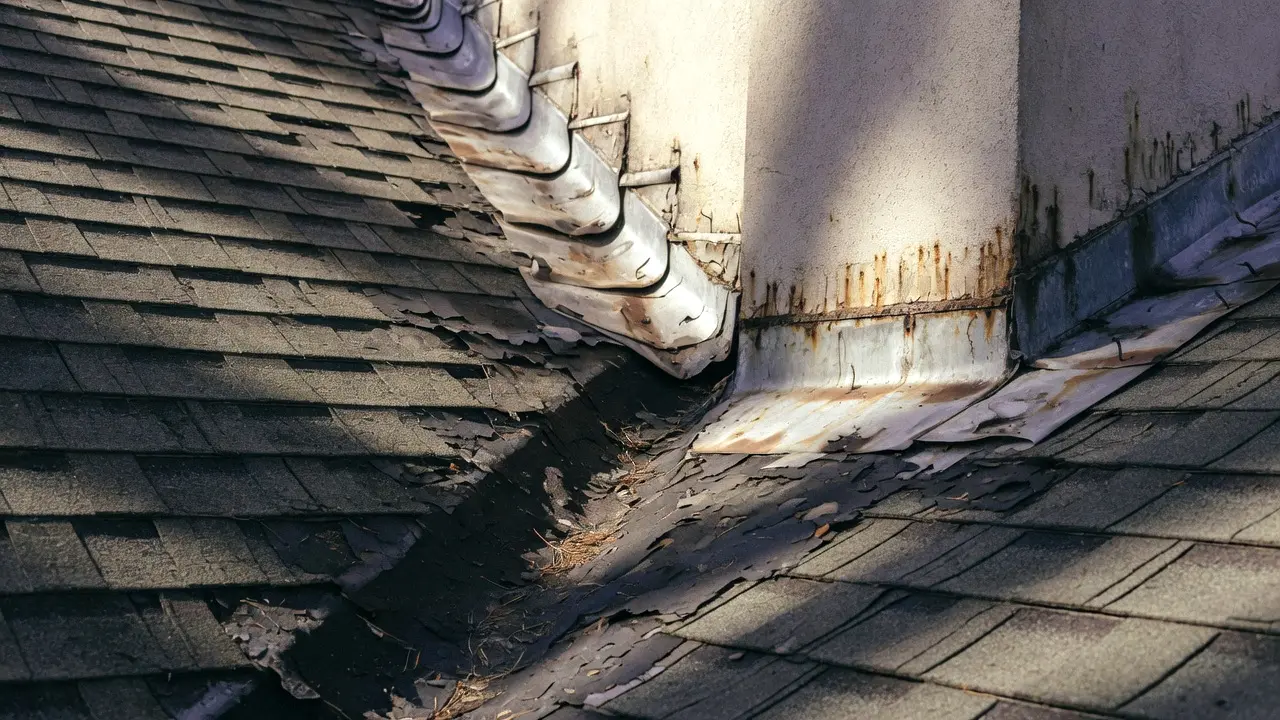
A split level puts two or three roof planes at different heights against a vertical wall, and every one of those junctions is step flashing and a valley. That is where water gets in, long before the shingles themselves wear out. Add the shallow pitch section over a carport, a breezeway or a 1970s family room addition, where asphalt shingles were never rated to sit, and you have the geometry behind the largest thing people in this township search for.
In New Jersey a reroof is ordinary maintenance
New Jersey treats repair or replacement of an existing roof covering on a detached one or two family house as ordinary maintenance under the Uniform Construction Code, so a like for like reroof takes no permit. Existing siding is treated the same way. That keeps the job quick and cheap. It also means no municipal record of the work exists afterward, and structural work, deck replacement, or any roof on a townhouse or condominium falls outside the exemption and does need a permit.
The panel was sized for a house that did not run on it
A 1966 Cherry Hill house heats with gas and usually makes hot water with gas, so the service it was built around never had to carry either. Central air came later, then a second system upstairs, then a finished lower level, and now a car charger. Each of those is load the original panel was never planned for. That is why an electrical call here starts at the service entrance rather than at the outlet that stopped working.
Cherry Hill checks the outside before you sell
A single family house here needs a certificate before it changes hands, and the inspection behind it is exterior only: sanitation, grading and drainage, sidewalks and driveways, vegetation and dead limbs, accessory structures, unregistered vehicles, ground hazards, sewer laterals kept clear of debris and roots, and where the sump pump discharges. The fee is $100, the first reinspection is free, repairs are due within thirty days, and some condominiums and townhomes are excluded.
What we run in Cherry Hill
What homeowners here search for most
Roofing
Roofing is the largest single search term in Cherry Hill and roughly forty percent of the town's total demand, which fits a township built almost entirely of split levels and stretched ranchers, forms that pile up valleys, step flashing and shallow pitch carport and family room additions where asphalt shingles were never rated to sit.
See roofing →Plumbing
Cherry Hill Township puts the sanitary line on the property owner from the house out to the main line connection, and a lateral laid during the township's 1955 to 1970 build-out sits squarely inside the window when bituminized fiber conduit was the normal material for that run.
See plumbing →Handyman
The certificate a single family house needs before resale is an exterior inspection only, so what comes back is a frontage-and-yard list rather than a house list: sidewalks, driveways, grading and drainage, dead limbs, accessory structures and where the sump discharges. It is ground work, weather-dependent, and all of it is due within thirty days of the notice.
See handyman →Electrical
A panel installed in a 1966 Cherry Hill house was sized for a home whose heat and hot water did not run on it, and the houses finished at the tail of the boom fall inside the window when solid aluminum branch wiring was in use, so a capacity question here is often a wiring question at the same time.
See electrical →On the ground in Cherry Hill
Two land rushes built Cherry Hill, thirty years apart. Erlton and Ellisburg on the western side came out of the first one, which followed the Ben Franklin Bridge and ran decades ahead of the 1966 median. Everything after that is the boom laid over farmland, Kingston Estates, Greenhaven, Barclay Farm, Cherry Hill Estates and the rest, mid 1950s through 1970, with infill and townhouse development filling the gaps in the fifty years since.
The name is younger than the older half of the housing. This was Delaware Township until a non binding referendum in 1961, adopted that November, forced by the postal service because another New Jersey municipality already used the name. So the houses in Erlton went up in a township called something else.
It is worth knowing which side of that line your street sits on before you assume anything about what is behind the walls. An Erlton twin and a Barclay Farm split level were put up by different builders, for different buyers, under different codes, and they give out in different places. The plumbing question that matters on one street is not the one that matters six blocks west.
Cherry Hill questions
Straight answers for Cherry Hill.
What does the Cherry Hill resale inspection actually check?
The exterior only. Before a single family house is resold, the township's property maintenance officer inspects the outside for sanitation, grading and drainage, sidewalks and driveways, weeds and dead limbs, accessory structures, unregistered vehicles, ground hazards, sewer laterals kept free of debris and roots, and sump pump discharge. The fee is $100, the first reinspection is free, and anything written up is due within thirty days. Some condominiums and townhomes are excluded from it entirely.
There is no permit and no inspection on a New Jersey reroof. What should I ask for instead?
Ask for the details in writing, because your contract is the only record the job happened. Get the scope to name the step flashing at every wall, the valley treatment, the chimney and the pipe boots, not just the shingle. Ask what happens if bad decking turns up. On a split level, ask specifically how the shallow pitch section over the carport or family room is being covered, because shingles alone do not belong there.
Half my street replaced something the same year I did. Is that normal in Cherry Hill?
It is the township's defining pattern. Cherry Hill went from about 10,000 people to over 64,000 between 1950 and 1970, so whole developments were roofed, piped and wired in a single season to a single spec. Sixty years on they reach the end of that life together. It is worth knowing what your neighbors are finding, and it is worth booking ahead of the wave rather than into the middle of it.
My basement is dry but the lower level of my split level is damp. Is that the same problem?
Usually not. A split level's lower level sits only part way into the ground, often on a slab, with the outside grade at or barely below the finished floor a few feet away. Water arrives at the sill plate and the slab edge instead of through a cove joint in a basement wall. The cause is nearly always grading, a downspout dropping at the corner, or a sump line discharging too close to the house.
My Cherry Hill house looks older than the ones a few streets over. Does that change the work?
It changes most of it. Erlton and Ellisburg on the western side predate the boom, while Kingston Estates, Barclay Farm, Greenhaven and Cherry Hill Estates are the postwar developments laid over farmland. A prewar house and a 1968 split level share a township and very little else: different foundations, different wiring, different roof geometry, and different reasons behind the same symptom. Establish which one you have before applying the neighborhood answer to it.
Nearby