
HVAC, plumbing and home repair in McCandless
One number for plumbing, electrical, heating & cooling, roofing, handyman work and more in McCandless.
Part of our Pittsburgh service area · median home here was built around the early 1970s
What breaks in McCandless
The age of the housing decides the work.
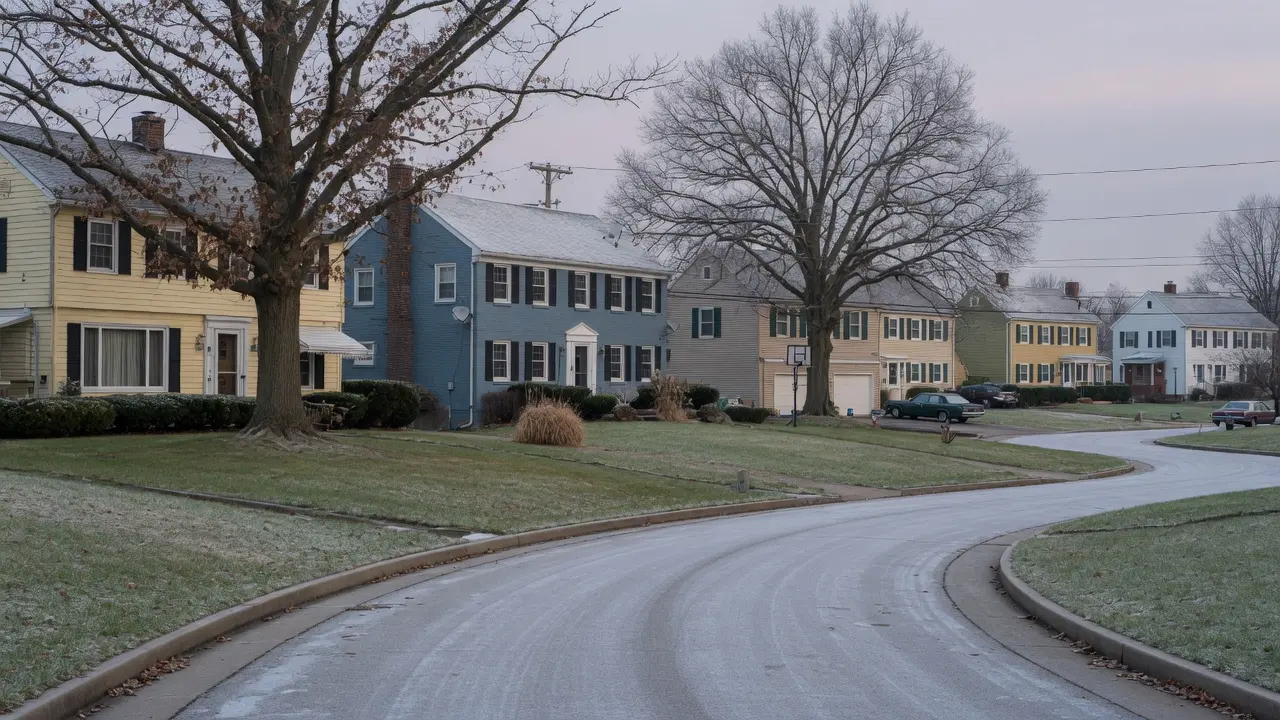
McCandless is a post-war suburb almost all the way through. Three consecutive decades, the 1960s, 70s and 80s, hold 56.0% of every home in the town, and only 11.5% of it was built in 2000 or later. That narrow band is the useful part: a house here is far more likely to be one decade's building practice all the way through than a patchwork of four. Two other things sit under the stock rather than in it. One is an old coal working that reaches only one edge of the town. The other is the sewer, which in McCandless is not a utility bill but a condition on selling the house.
The furnace is newer than the house. The ductwork is not.
8,183 of McCandless's 12,874 housing units were finished before 1980, and the single largest decade is the 1970s at 2,578 homes. On a house from that band the heating equipment has usually been changed, but the duct layout and the chase it runs through are the ones the builder put in, sized for the equipment and the insulation standards of the decade the house went up. A correctly sized new furnace inherits that layout, which is why rooms at the end of a long trunk can stay cold after a replacement.
The mined ground stops at one edge of town
PA DEP's mine-subsidence mapping shows coal workings under only a narrow strip of McCandless, along the town's eastern boundary near Babcock Blvd: the Wildwood Mine, an Upper Freeport seam operation that stopped in 1968 and runs mostly east into Hampton. Hampton is far more heavily undermined than McCandless. So a bowed wall in most of this town is a water and soil question rather than a mine question. DEP also says it cannot verify that its historical mine records are accurate or complete, so a blank space on the map is not a clearance.
Where the sewer reaches, connecting is not optional
Where a public sewer abuts a McCandless property, the ordinance requires the owner to connect at their own cost, and a septic system may not be kept where public sewer is reasonably accessible. The disused system is written down as well: once the house is on the sewer, the tank or cesspool has to be abandoned, cleansed and filled under Town or Authority supervision, and one left in the ground is declared a nuisance the Town can abate at the owner's expense. That is a rule attached to the lot rather than to the plumbing.
The dye test obligation runs with the land
The point-of-sale requirement in McCandless is a Document of Certification from the McCandless Township Sanitary Authority. If a dye test finds a downspout, French drain, areaway or basement seepage tied into the sanitary sewer, MTSA will not issue it until that connection is removed, inspected and approved. The obligation is not the seller's personally. It runs with the land, so no side agreement between buyer and seller lifts it, and MTSA is not a party to the contract that promised it would. Whoever owns the house when the connection is found owns the dig.
What we run in McCandless
What actually gets called in the most here
Heating & Cooling
Heating and cooling is the only category the keyword data returns for McCandless, and both terms are repair terms rather than installation terms. That is a useful signal on this stock: the question behind those searches is not what to buy, it is whether the thing already in the basement is worth keeping another winter, and that answer depends on what it is connected to as much as on the unit itself.
See heating & cooling →Plumbing
An MTSA dye test is not looking at fixtures. It is looking for storm and surface water reaching the sanitary sewer, which is why clearing a failed one is a sequence rather than a visit: find where the water gets in, sever it, give the discharge a lawful outlet, then book the re-inspection that releases the certification. Separately from any sale, a lateral MTSA judges to be letting groundwater in can be served written notice to repair or replace inside 60 days, at the owner's cost.
See plumbing →Basement Waterproofing
A wet basement in McCandless is a drainage problem with a legal constraint attached. The ordinance names basement seepage routed into the sanitary sewer as an illegal connection, and bars subsurface drainage and foundation drains from that system as well, so a sump serving them has to be sent somewhere else. That pushes the fix outside, where the Town's stormwater and grading thresholds set the schedule rather than the pump does.
See basement waterproofing →We cover the other trades in McCandless too — all ten services. Not sure which one it is? Describe the symptom and we will work out the cause.
On the ground in McCandless
Most of the Town is on the McCandless Township Sanitary Authority's collection system; a portion of the southwestern section is on ALCOSAN. MTSA is the one that gates sales, and it is worth checking before you pay for a resale test whether the property was already dye tested under MTSA's Comprehensive Sewer Inspection Program in the previous 18 months, because that test can be substituted. Public water is a separate map again: West View Water Authority supplies the Town, not Pennsylvania American. On a lead service line West View owns the pipe from the main to the curb stop and the homeowner owns the run from the curb stop to the meter, so tell West View before you replace your side and both halves can go in one dig.
McCandless also runs two counters that do not talk to each other. A new structure or a change of use needs a green sheet from MTSA confirming tap-in approval before the Town will process the building permit, and MTSA's office is not the municipal building. The Town replaced its entire zoning ordinance in June 2023, so any setback figure quoted from before that date needs checking against the current code.
McCandless questions
Straight answers for McCandless.
How far ahead of closing does McCandless need the sewer certification?
A Document of Certification from the McCandless Township Sanitary Authority, showing no storm or surface water is connected to the sanitary sewer. Apply at least 14 days before the sale date; the dye test has to be performed within 14 days of that application. If weather makes the test impossible, or a repair the test finds cannot be finished before closing, MTSA may at its sole discretion issue a Temporary Document of Certification instead, against security it sets — so a failed test is not automatically a dead settlement date. MTSA's published fees from January 1, 2026 are $50 for the administrative documentation, $75 for the exterior field test and $50 for interior inspection and testing. Selling without one of the two certifications carries a fine of $600 plus costs of prosecution, with up to 90 days in default of payment; once the applicable notice period has run, each further day counts as a separate offense.
Can I use my own plumber for the McCandless dye test?
Only if MTSA designates them. The test is performed either by MTSA itself or by a plumber MTSA designates, and that plumber must be registered and licensed by the Allegheny County Health Department. MTSA is named in the ordinance as the Town's sole and exclusive agent for dye testing, so a report from an inspector it has not designated does not substitute for it. The corrective plumbing after a failed test is a separate job and a separate choice of contractor, among contractors that county registration covers, and it is the part that moves the closing date.
I want to add a patio behind the house. What does McCandless require?
A building or zoning permit, and a survey prepared by a registered professional land surveyor carrying an MTSA stamp clearing their facilities. A Google Maps or Allegheny County real estate database screenshot does not qualify. At 400 square feet of added impervious surface the Town's Small Projects Stormwater requirements apply, and gravel counts toward that threshold; at 2,500 square feet it goes to the Town Engineer with a review escrow posted first. Grading is permitted separately: 5,000 square feet of earth disturbance for a minor permit, 10,890 for a major one, or any retaining wall over four feet, which also needs engineered drawings.
I am thinking about a heat pump. What should I check first in McCandless?
Start with the electric side, because McCandless is split between two suppliers: Duquesne Light covers much of the eastern side of town and Penn Power the western, so the utility you deal with depends on the street. Then look at the panel and the service, since a heat pump adds a large fixed electrical load to a service that was not sized for it. Electrical work here can need a separate permit and inspections from a certified third-party agency on top of the Town's building permit, because McCandless administers the Uniform Construction Code itself and is allowed to do that through retained agencies.
Nearby