
Home services in Mount Laurel, township and association
One number for plumbing, electrical, heating & cooling, roofing, handyman work and more in Mount Laurel.
Part of our South Jersey service area · median home here was built around 1987
What breaks in Mount Laurel
The age of the housing decides the work.
Mount Laurel is the township a New Jersey legal doctrine is named after. The 1975 state Supreme Court decision in Southern Burlington County NAACP v. Mount Laurel struck down zoning that left no room for low and moderate income housing, and after the follow-up ruling in 1983 and the Fair Housing Act that came with it, the building went up fast. That is why so much of the township is townhouses, condominiums and apartments, and why the housing here arrived in two compressed waves rather than over a century. The median house is now around forty years old, and it is aging as a group.
The doctrine is named after this township
In 1975 the New Jersey Supreme Court held that Mount Laurel's zoning could not exclude low and moderate income housing. The 1983 follow-up decision and the Fair Housing Act that followed it put real machinery behind that, and the build-out ran through the late 1980s and 1990s. The point for a homeowner is not the law, it is the calendar. A township that got built in two short bursts has a housing stock that reaches the end of its service life in two short bursts.
Your water is a blend, and hardness moves with it
The township MUA does not draw everything from one place. It treats its own groundwater and it buys finished water from a neighboring authority and from a private utility, so what arrives at your tap is a mix. The MUA's own material puts its treated water and the private supply inside the 80 to 100 parts per million range it treats as optimal, and the purchased supply from the neighboring authority as high as 130. That difference shows up as scale on elements, heat exchangers and mixing cartridges.
Everything mechanical is on its second round
Mount Laurel had roughly 5,000 residents in 1960 and about 40,000 by 2000, and it has been close to flat since. At a median build year of 1987 the typical house is past its second heating and cooling changeout and its second or third water heater. The panel is usually still the original one. That is why the electrical conversation here is almost always about capacity rather than failure, and why the same three jobs come up street after street.
Flat, sandy ground with nothing under it
Mount Laurel sits on inner coastal plain. There is no bedrock beneath it and no fieldstone in it, so a foundation conversation here is about water pressure against a poured wall, not about rebuilding a stone one. Digging is easy. Keeping the hole dry is not, because in much of the township the water table is not far down. A damp basement in a 1987 house is normally a gutter, a grade or a downspout dumping at the corner, and it is worth ruling those out before anyone quotes excavation.
What we run in Mount Laurel
What homeowners here search for most
Plumbing
Mount Laurel's MUA owns the water and sewer mains and nothing else, so both the water service and the sewer lateral are the owner's from the main in, including the length under the roadway, and the township's blended supply runs harder in places than the MUA's own treated water does.
See plumbing →Electrical
A panel installed for a mid-1980s Mount Laurel house was specified for the all-electric loads of that decade and nothing beyond them, and in the township's attached housing it usually sits in a utility closet with no room to grow. Adding a charger or a second system here therefore becomes a panel-replacement conversation far more often than it does in the older towns west of the river.
See electrical →Handyman
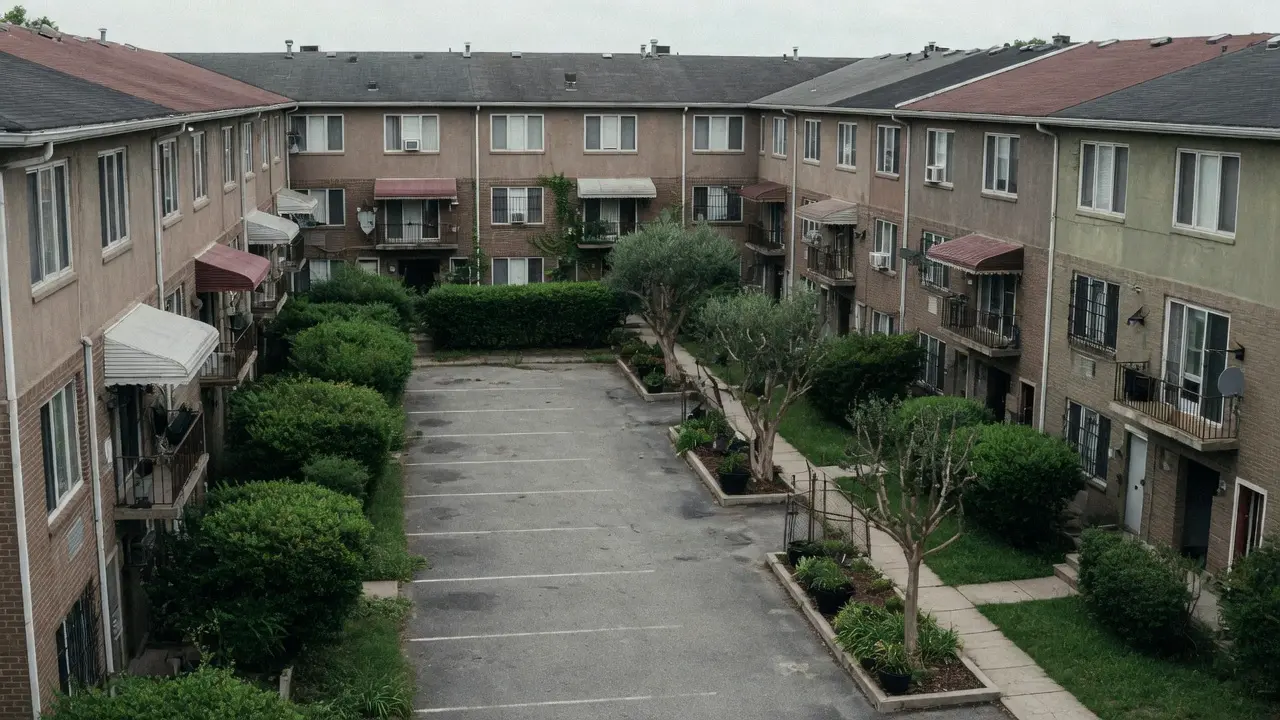
More than half of Mount Laurel is townhouses, condominiums and apartments, so the work that recurs here is unit turnover: the interior items that sit on your side of a boundary somebody else drew, on the schedule of a move-out rather than a sale.
See handyman →On the ground in Mount Laurel
Mount Laurel has a handful of genuinely old buildings, Paulsdale on Hooton Road among them, and almost no old housing. That is unusual for a Burlington County township and it changes what you are dealing with. There is no historic commission standing between you and a new front door. What there often is instead is an association, and its documents are the thing to read before you price anything.
The other consequence of building a township this late is that its mechanical equipment is only now coming of age. Mount Laurel went up after heat pumps became standard here, so a great many of its systems are reaching first replacement rather than second or third, and the houses around them are reaching it on the same timetable.
Almost every job here therefore turns on a boundary rather than a birthday. Before you price anything, establish whether the broken thing is yours or the association’s. That single answer moves the cost more than the age of the building ever will.
Mount Laurel questions
Straight answers for Mount Laurel.
Why does my water heater and shower valve scale up so fast in Mount Laurel?
Hardness, and it is not the same everywhere in the township. The MUA blends its own treated groundwater with water bought from a neighboring authority and from a private utility. Its own supply sits in the 80 to 100 parts per million band it calls optimal, while the purchased supply runs as high as 130. Expect shorter life from elements, tankless heat exchangers and mixing cartridges, and note that the MUA owns only the mains, so the service line to your building is yours.
The township approved my permit. Why is my association still saying no?
Because they are two separate approvals and neither one substitutes for the other. A township construction permit says the work meets code. Your association's governing documents say whether you may change the thing at all, and in Mount Laurel's attached housing that routinely covers where an outdoor condenser can sit, what a door or window may look like, and whether a charger can go in a shared garage. Get the association's answer first. It is the one that decides scope.
People say Mount Laurel like it is a law. Does that affect my house?
Only indirectly, but the effect is real. The doctrine that carries this township's name is about zoning and affordable housing obligations, not about your repair. What it changed for you is the shape of the housing stock: a large share of Mount Laurel went up in a compressed period after 1983, much of it attached, so the equipment on your street is the same age as the equipment next door and a great many homes came with an association attached from day one.
My house is from the 1980s. Why does it already need this much work?
Because the median Mount Laurel house is now around forty years old. The township went from roughly 5,000 people in 1960 to about 40,000 by 2000 and has been close to flat since, so the housing arrived in waves and ages as a group. At forty years a house is past its second heating and cooling changeout and its second or third water heater, while the panel is usually still original. That combination is why capacity comes up before failure does.
Nearby