
Is it normal for a heat pump to run constantly in winter?
Yes, and it is usually a sign the system is working the way it should. A heat pump moves heat instead of burning fuel, so it heats at a low, steady rate. Running for hours at a stretch on a cold day is normal, not a breakdown.
A gas furnace works differently. It makes a lot of heat quickly, shuts off, and repeats. You hear it start and stop all evening. A heat pump reaches the same room temperature by running longer at a gentler output.
The colder it gets outside, the longer the run. On a January night in Hampton Roads, a healthy system may barely pause between bedtime and breakfast. That long runtime is the efficient setting. If you moved here from a furnace market, this is the adjustment that catches almost everyone.
Why does the air coming out feel cool?
Heat pump air is warmer than your room but cooler than your skin, so it can feel cold on your hand. That is by design and it does not mean the system has failed. Furnace air comes out hot. Heat pump air comes out warm and keeps coming.
Warmth also builds slowly, so you notice the moving air before you notice the comfort. A supply vent aimed at a chair, a fan set to run all the time, or a room at the far end of a long duct run will all make it feel draftier than it is.
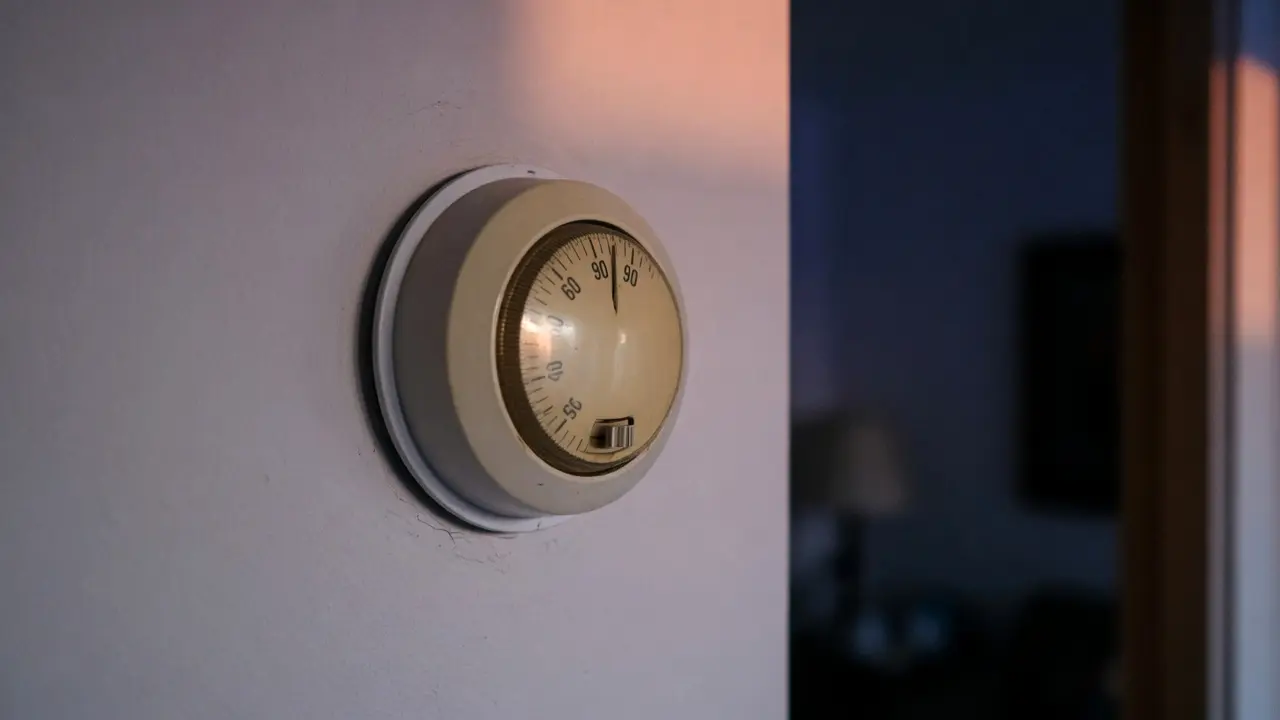
Check the thermostat rather than the vent. If the house is holding the number you set, the system is doing its job.
What is auxiliary heat, and why does it matter?
Auxiliary heat is a bank of electric heating elements that switches on when the heat pump alone cannot keep up. It costs far more to run than the heat pump itself. Most thermostats label it AUX, AUX HEAT, or show a small icon while it runs.
Short bursts of aux heat during a hard freeze are normal. Aux heat running when it is only mildly cold outside is not. That is the pattern worth watching, because the strips are quietly covering for a heat pump that is underperforming.
Watch the thermostat over a few evenings and note when AUX appears. If it shows up on a chilly but not freezing night, book a service visit.
Why is my heat pump covered in ice?
Some frost on the outdoor coil is normal in winter, and the system melts it off with a defrost cycle. During defrost you may hear a whoosh, see steam rising off the outdoor unit, and feel cooler air indoors for a few minutes. Then it goes back to heating.
The problem is ice that does not clear. If the coil is still encased hours later, or the whole cabinet looks like a block of ice, turn the system off at the thermostat and call for service. Running a heat pump that cannot defrost puts the compressor at risk.
Look up before you blame the equipment. A dripping gutter, a leaking hose bib, or a downspout emptying beside the unit can freeze it solid from the outside. That is a water problem sitting on top of an HVAC unit, and fixing the drip fixes the ice.
What is short cycling, and why is it worse than long runtime?
Short cycling is the system starting, running a few minutes, stopping, then starting again soon after. It is the pattern that should actually worry you. Constant restarting is hard on the compressor, and the house never gets a chance to even out.
Common causes include a clogged filter, a thermostat in a bad spot, low refrigerant, or equipment that is oversized for the house. Long and steady is healthy. Short and repetitive is not. If you can hear the outdoor unit kicking on every ten minutes, write down the timing before you call.
My electric bill jumped. Is the heat pump the cause?
Usually the strips are the cause, not the heat pump. A sharp winter increase normally means auxiliary or emergency heat ran much more than it should have. The heat pump is the cheap part of the system, and the backup is the expensive part.
Sometimes the reason is a setting rather than a fault. A deep thermostat setback forces the system to call for aux heat to catch up in the morning. Sometimes it is a defrost control, a sensor, or a refrigerant charge that has drifted.
Before you call, line the bill up against the weather for those weeks. A run of hard freezes explains a lot. A mild month does not.
What can I check myself before calling?
Start with the checks that cost nothing and solve a good share of winter calls. Work through this list before you book anything.
- Change the filter. A clogged filter starves airflow and pushes the system toward aux heat.
- Make sure the thermostat is not stuck on EMERGENCY HEAT or EM HEAT from an earlier cold snap.
- Set one temperature and leave it. Heat pumps do poorly with deep setbacks and big catch-up swings.
- Clear the outdoor unit. Leaves, lattice, stacked storage and yard waste all block the airflow it needs.
- Open the supply vents and pull furniture off the return grille.
- Look above and around the outdoor unit for water dripping onto it.
If the house is comfortable, the bill looks normal, and none of the above applies, long runtime on its own is not a reason to call anyone.
Could this be my house rather than my heat pump?
Often, yes. A heat pump that runs constantly and still never reaches the set temperature may be losing heat as fast as it makes it. That is a building problem, and no amount of equipment repair will fix it.
Air leaking around old windows, a failed weatherstrip, a gap under an exterior door, or an open crawl space all pull the same trick. The equipment is fine. The envelope is not. You can often find the worst offenders by walking the house on a windy day with the back of your hand near the frames.
This is where a single-trade HVAC company runs out of road. Sharpline covers Heating & Cooling and Windows & Doors, so one conversation can look at the equipment and the envelope together, instead of leaving you to call two companies who each think it is the other one.
When should you actually call someone?
Call within the week if auxiliary heat runs when it is not near freezing, if the bill jumped with no cold snap to explain it, or if the system short cycles. None of those are emergencies, and all three cost more the longer they run.
Call right away, after shutting the system off at the thermostat, if the outdoor unit is still encased in ice hours after a defrost, if you smell something burning, or if there is no heat at all during a freeze.
Some of this is not ours to take first. If you smell gas or a carbon monoxide alarm sounds, leave the house and call the gas utility or 911 before anyone else. If the power is out on the street rather than at your panel, that is the utility.
And if nothing is wrong, we would rather say so. A heat pump that runs long, holds the number you set, and costs about what it did last winter needs nothing from us. If you are not sure which of these you have, contact Sharpline Home Services and describe what you are seeing.