
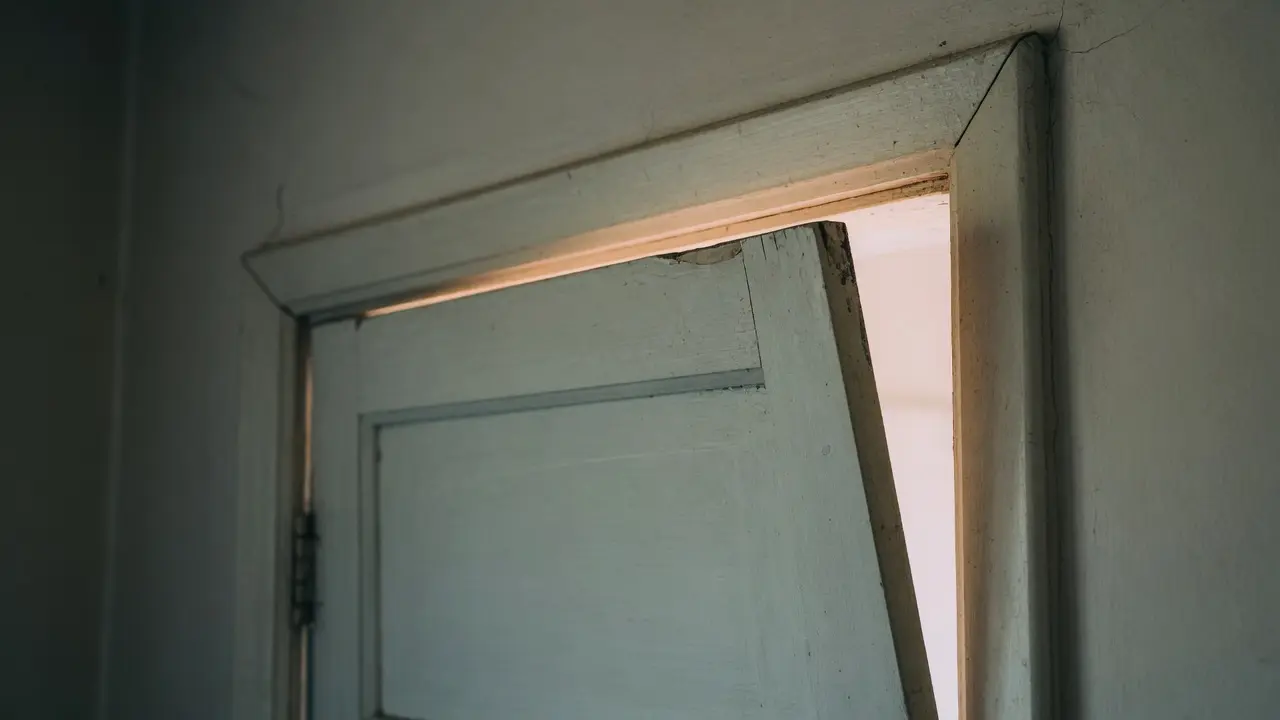
Has the door always been stiff, or did this start recently?
Timing is the best clue you have. A door that's been slightly tight since you moved in was probably hung a little out of square. That's a door problem and it's fixable. A door that worked fine for six years and now scrapes is telling you something changed.
Write down the date it started. It sounds fussy, but it's the most useful thing you can do in the first week.
- Started in late spring, eases off by winter. That's moisture.
- Started after a very wet stretch or a long dry spell. That's often the ground under the house.
- Started slowly and gets worse every month. Weather doesn't work that way. Something is moving.
- Started right after nearby work. New flooring, a heavy appliance or an opened wall all change how a door hangs.
Could it just be humidity?
Very often, yes. Wood doors and wood frames pull moisture out of the air and swell across the grain. Hampton Roads stays humid for a long stretch of the year, and that swelling is enough to make a door rub.
Humidity sticking has a signature. It's seasonal, it reverses, and it comes back around the same time each year. Solid wood and older panel doors swell more than hollow-core interior doors. It shows up first in the damp parts of a house, like a room over a crawl space or a bathroom with a tired fan.
If that sounds like yours, run the air conditioning or a dehumidifier and watch it for two or three weeks. Drying out a damp crawl space often frees up several doors at once.
What should you check before you blame the house?
Start with a screwdriver and ten minutes. Hardware is the cause often enough that it's worth ruling out first.
- Tighten the hinge screws, top hinge first. The top hinge carries most of the weight. If a screw just spins, swap it for a 3 inch screw that reaches the framing behind the jamb.
- Grab the handle edge and lift. If the door moves, your hinges are worn or loose, not your wall.
- Read the strike plate. Shiny scrape marks show you which way the latch is missing by.
- Rub chalk on the door edge, close it gently, then open it again. Whatever transfers to the jamb is where it binds.
- Check the gap all the way around. An even gap points at hardware or swelling. A gap that tapers points at the frame.
A loose top hinge is a common cause and often a fifteen minute fix.
Which corner is it rubbing on, and what does that tell you?
Where the door binds tells you the direction of the movement. This is the check that separates a door problem from a house problem, and you can do it with your eyes.
- Rubs evenly along the top edge. Usually swelling, especially in the wet months.
- Rubs at the upper latch corner while the gap opens at the lower latch corner. The opening is racking. One side has dropped relative to the other.
- Rubs at the bottom on the hinge side. Often a sagging top hinge, sometimes the floor underneath it.
- The gap is a wedge, tight at one end and wide at the other. The frame isn't square anymore, and frames don't go out of square on their own.
Now do the same check on the next door down the hall. If two doors on the same wall bind in the same corner, you've stopped looking at doors.
What do cracks above the door frame mean?
A diagonal crack running up and out from the top corner of a door or window is the classic sign the opening has racked. Corners of openings are the weak points in a wall, so movement shows there first. A straight hairline along a taped seam is usually cosmetic.
What matters more than the crack is whether it's still moving. Patch it, write the date on the back of the trim, and look again in six months. A patch that holds means the movement stopped. A patch that reopens means it didn't.
Look for the company it keeps: sloping or bouncy floors, gaps at baseboards, windows getting harder to close, step cracks in exterior brick, nail pops. One alone is not much. Three in the same corner of the house is a pattern.
Filling and painting a crack without fixing the cause just resets the clock. That's true of Painting & Drywall work generally. The repair is only as good as the diagnosis under it.
Why would a house in Hampton Roads move at all?
Most homes here sit on a crawl space or a slab. Basements are rare this close to the coast because the water table is shallow, and that changes what goes wrong underneath you.
Over a crawl space, your floor is carried by piers, girders, joists and a sill plate, and all of that wood lives in a damp room you never visit. Standing water, a failed vapor barrier, wood rot or a settled pier can let one part of a floor drop. A door gap is only about an eighth of an inch to begin with, so it doesn't take much movement to close it up.
Soil moves too. Long dry spells shrink it and heavy rain swells it back, and the tropical season delivers a lot of water fast. Gutters that dump against the footing make it worse. If your sticking doors are all at one end of the house, go look at where the downspouts empty.
That's Foundation Repair and crawl space territory, not door work.
What if the door won't latch or lock?
Treat that one as urgent. A sticking interior door is annoying. An exterior door that won't throw its deadbolt means the house isn't secure tonight, and that moves it to the top of the list.
The quick fix is to adjust the strike plate so the bolt lines up again. Filing the opening slightly or shimming the plate can give you a working lock the same evening. Know what it is, though. If the frame has moved, you've matched the hardware to the new shape of the opening, and it can drift again.
Exterior doors also cost you money quietly when they stop sealing. A door that doesn't close cleanly leaks conditioned air all summer. On an older unit, replacement is sometimes a better answer than adjustment, and that's a Windows & Doors conversation.
Can you just plane the door down?
Sometimes, but it belongs at the end of the list. Planing takes off wood you can't put back.
Plane a swollen door in August and you'll have a gap and a draft in January. Plane a door whose frame is still moving and you'll be planing it again next year, a little narrower each time. Hardware first, then wait out a season if the sticking is mild, then adjust the strike. Plane last, and only when the gap is even and nothing is still shifting.
When should you actually call someone?
Most suddenly sticking doors don't need a visit. Tighten the top hinge, wait out the humid months, and plenty of them sort themselves out. Here's the honest split.
- Do it yourself. One door, wet season, even gap, no cracks anywhere. Screwdriver and patience.
- Worth a call, no rush. Worn hinges, a strike that needs moving, or a door that needs rehanging. Small work, and a Handyman job.
- Call this week. An exterior door that won't lock, or one that won't close at all. Security and weather both stop waiting.
- Get it looked at properly. Two or more doors or windows binding the same way, diagonal cracks that reopen after patching, sloping or spongy floors, or visible sag in the crawl space.
Some of this isn't a contractor call at all. Bowing walls, a floor that has dropped noticeably, or anything touching a load bearing element should be assessed by a licensed structural engineer first. That report is what tells whoever does the repair what the repair actually is.
If you're not sure which bucket you're in, call us and describe it. Which door, which corner, whether there are cracks. We'll tell you whether you're looking at a screwdriver, a door, or something under the house, and we'll confirm what's involved before anything gets booked.