
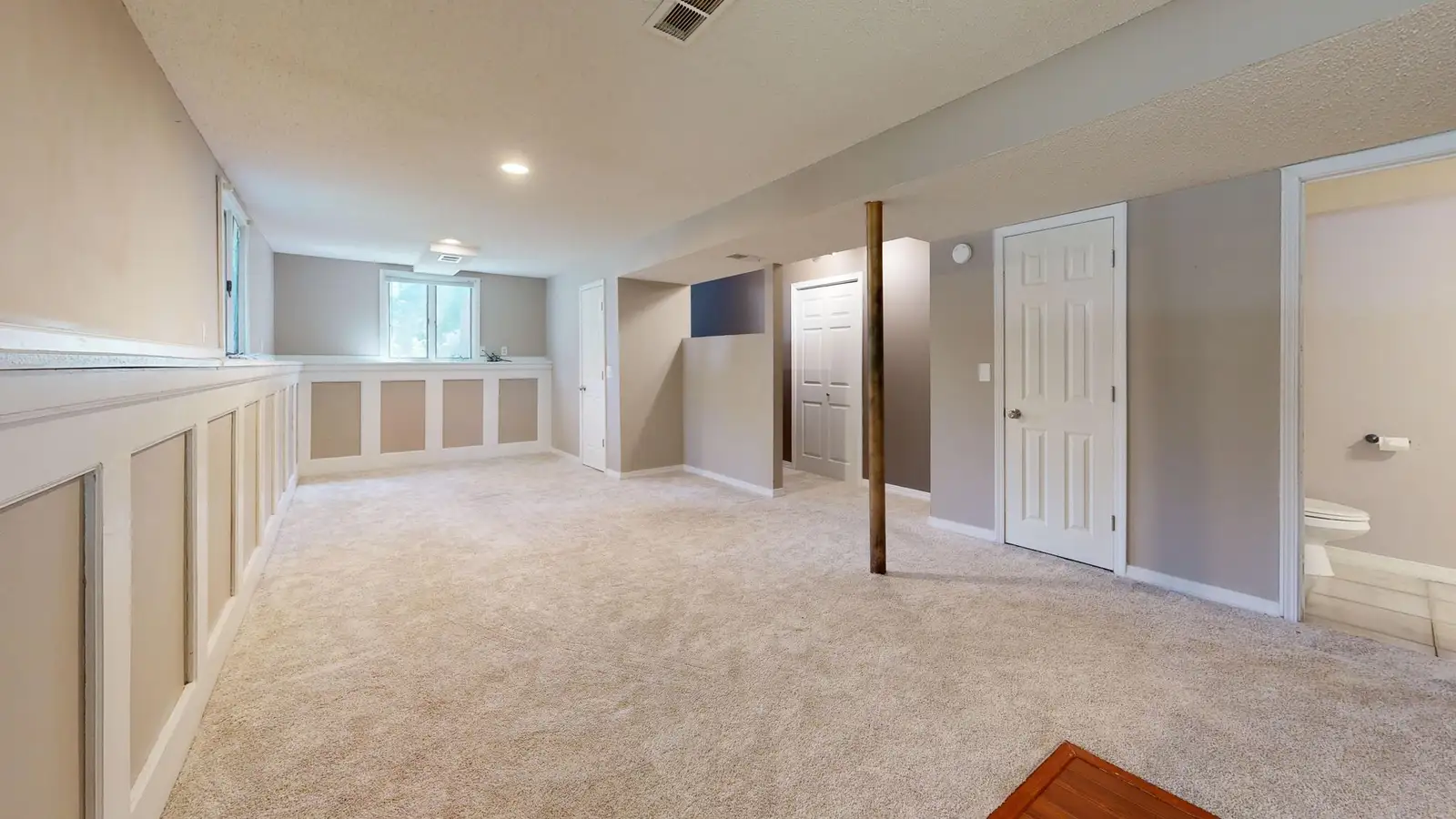
Basement Waterproofing in Southeastern PA
Need basement waterproofing in Southeastern PA? Sharpline handles wet basements, drainage, sump pumps, wall seepage, French drains, and moisture problems.
Basement Waterproofing across Southeastern Pennsylvania
Basement Waterproofing in Southeastern PA
If the same basement corner gets wet every time it rains, the puddle is only the symptom. The real question is how the water reached that spot.
Sharpline provides basement waterproofing in Southeastern PA when water keeps entering after storms, a sump pump can no longer keep up, walls remain damp, or moisture appears where the floor meets the foundation. Homes across Delaware County include older stone basements, concrete block walls, poured foundations, crawl spaces, and additions built decades after the original house. Those differences matter when diagnosing a water problem.
Some wet basements need an interior drainage system. Others need a sump pump, crack repair, grading correction, or better control of roof runoff. A plumbing leak can even look like groundwater at first.
The goal is to find the source before choosing the repair.
Basement Waterproofing Services in Southeastern PA
Water can enter a basement from several directions, so waterproofing should not begin with one standard product.
Sharpline provides basement waterproofing in Southeastern PA for recurring seepage, foundation wall leaks, cove-joint water, sump pump problems, crawl-space moisture, cracks, and drainage concerns. Depending on the source, the work may involve an interior perimeter drain, sump system, crack repair, wall drainage, exterior drainage improvements, or correction of gutters and downspouts.
A basement that floods during every major storm needs a different approach from one that develops a damp patch beneath a single window. Understanding that difference helps avoid unnecessary work.
Why Is My Basement Wet?
A wet basement can be caused by surface water, groundwater, plumbing, drainage, or a combination of problems. The timing and location of the water often provide useful clues.
Surface Water Reaching the Foundation
Rainwater should move away from the house. When gutters overflow, downspouts end too close to the foundation, or the ground slopes toward the building, water can collect beside basement walls.
Patios, walkways, driveways, and poorly drained window wells can also direct water toward the house. In some cases, correcting those exterior conditions may reduce basement water without opening the floor.
Water Coming Through Basement Walls
Masonry walls can show damp patches, staining, efflorescence, or active seepage when water builds up outside.
Cracks and penetrations may provide obvious entry points, but water can also migrate through porous masonry or deteriorated joints. Older stone and block basements can behave differently from newer poured-concrete walls, so the wall material matters.
Water Where the Wall Meets the Floor
The joint where the basement wall meets the slab is often called the cove joint. Water can appear there when pressure builds beneath or beside the basement floor.
If seepage repeatedly follows the perimeter during heavy rain, an interior drainage system may be considered to collect that water and move it toward a sump pit.
Water Coming Up Through the Basement Floor
Water that appears through floor cracks or low areas may be associated with groundwater pressure below the slab.
This does not mean every damp floor requires a perimeter drain. The source still needs to be separated from plumbing leaks, condensation, or surface water entering from another location.
Water From a Plumbing or Sewer Problem
Water in a basement during dry weather may have nothing to do with foundation waterproofing.
A leaking supply line, failed water heater, plumbing fixture, or sewer backup can create standing water that resembles seepage. Sewage entering through a floor drain is a plumbing or sewer issue and should be handled differently from groundwater.
Wet Basement Repair in Southeastern PA
Good wet basement repair southeastern pa starts with matching the repair to the source.
Repeated puddles, wet carpet, damaged drywall, rust near equipment, white mineral deposits on masonry, musty odors, and water that returns after every storm are all signs that the underlying condition needs attention. The repair may be simple, such as extending a downspout, or more involved, such as installing an interior perimeter drain and sump system.
A wet basement should not automatically lead to the most expensive option. The best repair is the one that actually addresses how water is entering.
Basement Drainage in Southeastern PA
Reliable basement drainage southeastern pa service is about collecting and directing water before it spreads across the basement.
Interior French Drains
An interior French drain, sometimes called a perimeter drain or drain tile system, is installed along the inside edge of the basement floor.
A strip of concrete is removed, drainage pipe and stone are placed below the slab, and the system routes water toward a sump pit. The concrete is then restored over the drainage channel.
This type of system is generally considered when groundwater or recurring perimeter seepage needs to be collected continuously.
Cove Joint Drainage
When water repeatedly enters where the wall meets the floor, drainage along the perimeter can capture it before it spreads.
The system needs to connect properly to a sump or other approved discharge point. Simply coating the wall does not relieve water pressure beneath the slab.
Drainage Board and Wall Systems
Some basements experience wall seepage as well as floor-level water.
Wall drainage materials can help direct moisture downward into a perimeter drainage system. The appropriate approach depends on wall condition, foundation material, and where water is entering.
Exterior Drainage
Not every drainage problem belongs inside the basement.
Correcting grading, extending downspouts, improving window wells, or redirecting roof runoff may be the better first step when surface water is concentrating beside the foundation.
Sump Pump Services in Southeastern PA
A drainage system can only work if collected water has somewhere to go. That is where sump pump services southeastern pa become important.
Sump Pump Installation
A sump pump removes water collected in a pit below the basement floor.
Installation involves more than placing a pump in a hole. The pit, drainage connection, pump capacity, discharge line, check valve, power source, and discharge location all affect how the system performs.
Sump Pump Replacement
Sump pumps do not last forever.
A pump that is old, unreliable, noisy, or no longer keeping up during storms may need replacement. Waiting until the pit overflows is an expensive way to discover that the pump has reached the end of its useful life.
Battery Backup Sump Pumps
Heavy storms can bring two problems at once: rising groundwater and a power outage.
A battery backup system can provide additional protection when the primary pump cannot operate because the house has lost power. Backup capacity should be selected around the actual sump system rather than treated as a one-size-fits-all add-on.
Sump Pump Check Valves
A check valve helps stop discharged water from flowing backward into the sump pit after the pump shuts off.
When a valve fails or is missing, the pump may cycle more often because water keeps returning to the pit. Excessive cycling can increase wear on the system.
Sump Pump Discharge Problems
A good pump can still perform poorly if the discharge line is restricted, frozen, poorly routed, or sending water back toward the foundation.
The discharge point should move water away from the house in a way that does not immediately create another drainage problem.
Signs Your Sump Pump May Be Failing
A sump pump that does not start when the water level rises needs attention. The same is true for a pump that runs continuously, cycles every few minutes, makes unusual noises, or leaves the pit nearly full.
A sticking float can prevent the pump from turning on. A blocked or frozen discharge line can stop water from leaving even when the pump itself operates correctly. Water flowing back into the pit after shutdown can indicate a check-valve problem.
Homeowners can sometimes test a sump pump by adding water to the pit and watching whether the float activates the pump. Electrical components should never be handled while standing in water or around unsafe conditions.
Basement Waterproofing for Older Southeastern Pennsylvania Homes
Older Delaware County homes bring their own waterproofing challenges.
Many properties throughout Drexel Hill, Havertown, Lansdowne, Swarthmore, Upper Darby, and nearby communities have full basements with stone or block walls. The basement may also contain an older slab, aging cast-iron plumbing, a former coal chute, previous waterproofing patches, or finished rooms added long after the house was built.
These conditions matter because older foundations were not constructed the same way as modern poured-concrete basements.
Water may move through mortar joints, enter at the cove, follow an old penetration, or collect around additions where drainage changed over time. Basement waterproofing southeastern pa should account for that history instead of assuming every basement is built the same way.
Stone Foundation Basement Waterproofing
Stone foundations can remain serviceable for generations, but moisture behavior can be different from that of modern concrete walls.
Water may work through deteriorated mortar joints, old patches, openings around utilities, or areas where outside drainage has changed. Applying waterproof paint to the inside surface does not remove groundwater pressure outside the wall.
Stone basement waterproofing may involve improving exterior drainage, repairing appropriate masonry areas, directing interior seepage toward a drainage system, or combining several measures depending on the condition of the wall.
The wall itself should be evaluated before selecting a repair.
Basement Wall Crack Repair
Not every basement crack means the foundation is failing. Not every crack should be treated as a simple leak either.
Stable Leaking Cracks
A stable crack that allows water through may sometimes be suitable for sealing or injection, depending on the foundation material and condition.
The surrounding wall should still be inspected. Sealing the crack makes little sense if active wall movement is continuing.
Cracks That Keep Moving
A widening crack, horizontal movement, stair-step cracking, or a wall beginning to bow changes the conversation.
At that point, the concern may involve foundation repair rather than waterproofing alone. Structural movement should be addressed before treating the crack as nothing more than a water entry point.
Interior vs. Exterior Basement Waterproofing
Neither interior nor exterior waterproofing is automatically better for every home.
Interior Waterproofing
Interior systems can include perimeter drains, sump pumps, wall drainage, and crack repair. These systems manage water after it reaches the foundation or beneath the slab and provide a controlled route for removal.
Interior work may be practical when exterior access is limited by porches, driveways, neighboring structures, landscaping, or other obstacles.
Exterior Waterproofing
Exterior work can involve excavation, access to the foundation wall, drainage materials, waterproofing membranes, footing drainage, and grading corrections.
It can be appropriate when the source of water and property conditions justify working from the outside.
The right decision depends on foundation condition, water source, access, drainage, landscaping, and the overall scope of the project.
Gutters and Grading Should Be Checked First
Before breaking up a basement floor, look outside.
A clogged gutter can overflow roof water beside a foundation during heavy rain. A short downspout can repeatedly dump water into the same patch of soil. Negative grading, sunken walkways, poorly drained window wells, and buried downspout problems can also concentrate water beside the basement.
This is especially important around older stone foundations.
Correcting a drainage problem outside can be less disruptive and less expensive than installing an interior system that was not actually necessary.
The practical rule is simple: do not assume the basement needs major waterproofing until obvious roof-runoff and grading problems have been considered.
Crawl Space Waterproofing and Moisture Control
Some Southeastern Pennsylvania homes are part basement and part crawl space.
Crawl spaces can collect standing water, ground moisture, condensation, and humidity that affects the framing above. Damp sill plates and joists may eventually deteriorate if moisture remains uncontrolled.
Possible moisture-control measures can include drainage, sump systems, vapor barriers, dehumidification, and correction of exterior water sources.
Structural damage should be evaluated separately. A vapor barrier will not repair a rotted sill plate or damaged floor joist.
Why Does My Basement Smell Musty When It Is Dry?
A basement can smell damp without having visible standing water.
Warm, humid summer air can condense against cool masonry and pipes. Stored cardboard, carpet, fabric, and other materials can absorb moisture and develop odors. Poor air circulation can make the problem worse.
A dehumidifier may help when humidity is the primary issue. Sweating pipes, dryer exhaust, and HVAC conditions should also be considered.
An interior French drain is not the right answer for a basement that has a humidity problem but no groundwater seepage.
Basement Waterproofing vs. Foundation Repair
Basement waterproofing and foundation repair are related services, but they address different problems.
Basement waterproofing focuses on water intrusion, drainage, sump pumps, seepage, and moisture control.
Foundation repair focuses on structural settlement, bowing walls, piers, sloping floors, and other support problems.
A stable wall that leaks is not the same as a wall moving inward. A dry foundation can still have structural movement, and a wet basement can exist without significant structural damage.
When both problems are present, they need to be addressed together in the right order.
Our Basement Waterproofing Process
A useful waterproofing process starts with information, not demolition.
Step 1: Tell Us When and Where the Water Appears
Timing matters.
Water that appears after heavy rain suggests a different problem from water showing up during dry weather. It also helps to know whether the issue is limited to one corner, follows an entire wall, or spreads around the full basement perimeter.
Step 2: Check Exterior Drainage
Gutters, downspouts, grading, window wells, patios, walkways, and roof runoff should be reviewed before assuming the problem starts underground.
Simple exterior issues can sometimes explain a surprising amount of basement water.
Step 3: Inspect the Basement
Walls, floor joints, cracks, sump pits, staining, efflorescence, damaged finishes, and previous repairs can all reveal how water is moving.
The basement should be viewed as a complete system rather than focusing only on the wettest spot.
Step 4: Identify the Water Source
Groundwater seepage, plumbing leaks, sewer backups, condensation, and structural cracks require different responses.
Finding the source helps identify which trade should address the problem.
Step 5: Recommend the Least Invasive Effective Repair
If improved grading or a downspout extension can solve the problem, there is little value in tearing up the basement floor.
When groundwater or perimeter seepage requires drainage and a sump system, the repair should be sized around the actual condition.
Step 6: Complete the Waterproofing Work
The work may involve drainage, sump pumps, crack repair, wall systems, exterior water management, or a combination of measures.
The scope should reflect what was found during diagnosis.
Step 7: Restore Damaged Finishes
Wet drywall, flooring, trim, and other finishes should be repaired after the moisture problem has been corrected.
Restoring the basement too early can hide an unresolved leak and lead to repeated damage.
When Basement Water Is Actually Another Problem
Not every basement water call belongs to a waterproofing contractor.
Water appearing during dry weather may come from plumbing. Sewage entering through a floor drain is a sewer or plumbing problem. A bowing basement wall may need foundation repair. Overflowing gutters may need roofing or drainage work before anything is done inside.
A basement that smells damp but never shows seepage may have a humidity problem instead.
Sharpline's multi-trade approach makes it possible to look beyond the puddle and consider what part of the home is actually causing it.
Why Choose Sharpline for Basement Waterproofing in Southeastern PA?
Basement water often crosses trade lines.
A wet wall may involve exterior drainage. A failed sump pump can become a plumbing or electrical concern. A moving wall may require foundation work. Water damage may also leave drywall, flooring, or trim that needs restoration after the source has been corrected.
Sharpline works across those related home-service areas, which can make complex moisture problems easier to diagnose and coordinate.
For homeowners comparing contractors, it is worth asking whether the proposed solution addresses the actual water source or simply installs the same waterproofing system in every basement.
Request Basement Waterproofing in Southeastern PA
Water showing up after every storm, a sump pump that no longer keeps up, or a basement corner that never seems to stay dry deserves more than another coat of waterproof paint.
Sharpline provides basement waterproofing, drainage, sump pump services, and wet basement repair in Southeastern PA for homeowners throughout its local service area.
Call 610-550-3248 and explain where the water appears and when it happens. Finding the source is the first step toward keeping the basement dry.
Southeastern PA basement waterproofing questions
Straight answers.
How much does basement waterproofing cost in Southeastern PA?
Cost depends on what is causing the problem. Extending a downspout, repairing one leaking crack, replacing a sump pump, and installing a full perimeter drainage system involve completely different amounts of work. Basement size, access, foundation type, drainage conditions, and damaged finishes can also affect the project.
Why does my basement get wet only when it rains?
Rain-related water often points toward exterior drainage, wall seepage, groundwater, or water entering at the cove joint. Gutters, downspouts, grading, window wells, foundation walls, and the basement floor should all be considered before choosing a repair.
Do I need an interior French drain?
Not every damp basement needs one. An interior perimeter drain is generally considered when recurring groundwater or perimeter seepage needs to be collected and directed toward a sump. A drainage problem outside the house may sometimes be corrected without opening the basement floor.
Can gutters and grading fix basement water?
They can when roof runoff or surface water is the main source. Clogged gutters, short downspouts, or soil sloping toward the house can keep the foundation saturated during storms. Correcting those problems should often be considered before more invasive waterproofing.
How do I know my sump pump needs replacement?
A pump that does not start, runs constantly, makes unusual noises, cycles rapidly, or leaves the pit full may need service or replacement. The float, check valve, discharge line, and power supply should also be checked before assuming the motor itself has failed.
Should I install a battery backup sump pump?
A battery backup can provide additional protection when storms cause a power outage while groundwater is rising. Whether you need one depends on how much your basement relies on the sump system and the consequences if the primary pump stops.
Can leaking foundation cracks be repaired from inside?
Some stable leaking cracks can be repaired from the interior, depending on the foundation material and condition. A crack that is widening, shifting, or associated with wall movement should be evaluated as a possible structural issue rather than treated only as a leak.
What is the difference between waterproofing and foundation repair?
Waterproofing deals with seepage, drainage, sump pumps, and moisture control. Foundation repair addresses structural movement, settlement, bowing walls, and support problems. Some homes have both issues, but they should not automatically receive the same repair.
Why does my basement smell damp even when there is no standing water?
Musty odors can come from humidity, condensation, damp stored materials, sweating pipes, poor ventilation, or past water exposure. Visible groundwater is not always present. Humidity should be measured before assuming a drainage system is needed.
What areas of Southeastern PA do you serve?
Sharpline serves communities throughout Delaware County, including Media, Springfield, Swarthmore, Drexel Hill, Havertown, Upper Darby, Broomall, Aston, Glen Mills, Lansdowne, Wallingford, Ridley Township, Ridley Park, Newtown Square, and surrounding Southeastern Pennsylvania communities.
Around Southeastern PA