The Financial Black Hole of Reactive Repairs
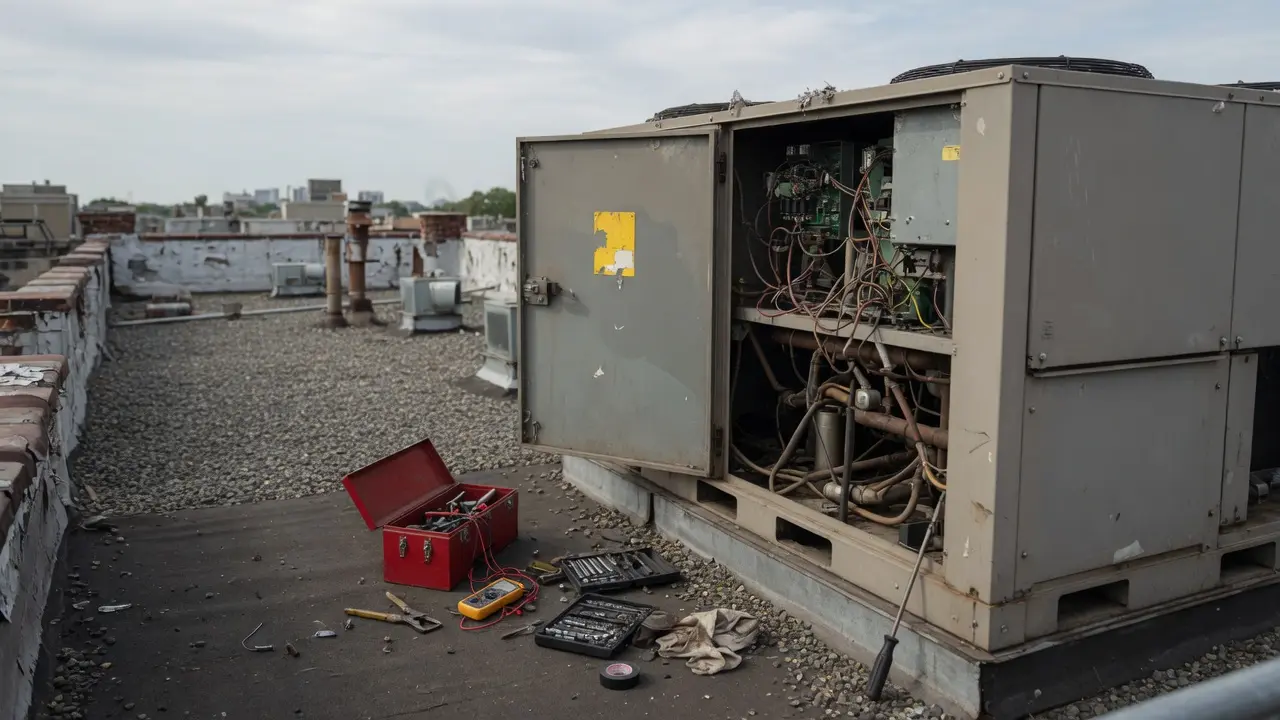
At Sharpline Inc., we’ve seen how these nightmares can be avoided by simply investing in professional preventive maintenance services before the crisis hits. Moving from a “fix it when it breaks” mindset to a proactive strategy is the single most effective way to protect your equity and keep your sanity intact. Most owners view maintenance as a “sunk cost”, money gone that they’ll never see again. But after twenty years in this industry, we can tell you that the smartest investors view it as an insurance policy. The reactive trap feels like you’re saving a buck today, but you’re actually just stacking up a massive debt that will eventually be called in at the worst possible time, usually with a mountain of interest attached. When you wait for a system to fail, you lose every bit of leverage you have as a buyer. You are no longer “hiring a contractor”; you are “begging for a rescue.” This lack of leverage hits your wallet in three specific ways: • The Emergency Premium If your HVAC unit dies on a quiet Tuesday afternoon in October, you can shop around for quotes. If it dies on a 95-degree Sunday in July, you’ll pay whatever the first guy who picks up the phone asks. Emergency labor rates are often double or triple the standard hourly cost. Add in the cost of “expedited shipping” for parts, and you’ve just spent three years’ worth of maintenance budget on a single afternoon of panic. • The Domino Effect (Collateral Damage) Systems rarely fail in a vacuum. A $50 sensor that fails in a furnace can cause the entire unit to overheat and crack the heat exchanger, a $3,000 part. A neglected roof drain doesn’t just stay “clogged”; it backs up, finds a seam, and destroys $10,000 worth of drywall, insulation, and office equipment below it. By the time you notice a reactive issue, the original problem has usually invited several expensive friends to the party. • The Cost of Downtime For a commercial property owner, the cost of the repair is often secondary to the cost of the building being unusable. If your retail space has no water, your tenants can’t open for business. If they can’t open, they aren’t making money, and they’ll soon be looking at their lease for a way to stop paying rent. Proactive preventive maintenance services ensure that the building stays open and the revenue keeps flowing without interruption.
Extending the Life of Your Most Expensive Assets
Think about the big-ticket items in your building: the roof, the HVAC system, the elevator, and the parking lot. These are your “capital expenditures” (CapEx). If you can squeeze an extra five or ten years out of a rooftop unit simply by changing filters and cleaning coils, you are effectively putting thousands of dollars back into your pocket every single year.
The HVAC Lifecycle
In the US, most commercial HVAC systems are rated for about 15 to 20 years. However, a neglected unit will start showing its age at year 10. The compressors work harder, the motors run hotter, and the efficiency plummets. By year 12, it’s a “zombie” unit; it’s technically running, but it’s eating your profits in repairs and energy costs. Regular tune-ups keep that unit running at factory specs, pushing that massive $40,000 replacement bill further and further into the future.
Protecting the Building Envelope
Your roof and exterior walls are the skin of your investment. Once that skin is breached, the clock starts ticking on structural damage. We’ve seen $500 worth of masonry tuck-pointing save owners from $20,000 structural wall repairs later on. Small, annual inspections catch the hairline cracks and the loose flashing before they become entry points for moisture and mold.
Energy Bills: The Silent Profit Killer
One of the most overlooked aspects of long-term maintenance costs is the monthly utility bill. A building that isn’t maintained is a building that is hungry for energy. When a cooling system is dirty or out of balance, it has to run longer to achieve the same result. When air filters are clogged, the fans have to spin faster and consume more electricity to move air through the building. Even something as simple as a leaky faucet or a running toilet can add hundreds of dollars to a monthly water bill if left unchecked. We often find that when we take over a property and implement a rigorous maintenance schedule, the utility bills drop by 10% to 15% almost immediately. In a large commercial space, that’s not just “pocket change”, it’s enough to cover the cost of the maintenance contract itself. You aren’t just saving money on repairs; you’re increasing your building’s Net Operating Income (NOI) every single month.
The Human Factor: Tenant Retention and Reputation
Your property is a product, and your tenants are your customers. In a competitive market, your reputation as a landlord is everything. Word travels fast. If a building is known for having an elevator that is “always down” or a perpetually drafty lobby, high-quality tenants will stay away. High turnover is the most expensive part of property ownership. Every time a tenant leaves, you face: • Brokerage commissions to find a new occupant. • Tenant Improvement (TI) allowances to customize the space for the next person. • Vacancy loss (the 3 to 6 months where the space sits empty, but the taxes and insurance still have to be paid). A well-maintained building feels different. It smells better, the lights don’t flicker, and the temperature is consistent. When tenants see a maintenance crew proactively working on the building, rather than just reacting to complaints, it builds a sense of security. They are far more likely to renew their lease, even at a higher rate, because they know they won’t have to deal with the stress of a failing building.
Safety, Liability, and the US Legal Landscape
We live in a litigious society. As a property owner in the USA, you have a “duty of care” to anyone who steps onto your premises. If someone trips on a cracked sidewalk or slips on a leak from a neglected AC unit, you are potentially on the hook for a massive liability claim. Insurance companies love preventive maintenance. In fact, many commercial policies now require proof of regular inspections for things like fire suppression systems and electrical panels. If you can’t show a paper trail of maintenance, they may deny a claim or jack up your premiums. Building a solid facility maintenance planning strategy creates a “defensive paper trail.” It proves that you have been a responsible steward of the property. It shows that you didn’t just ignore a problem, you were actively looking for it and addressing it. That documentation is your best friend if you ever have to stand in front of a judge or an insurance adjuster.
How to Build a Strategy That Actually Works
So, how do you move from the “chaos” of reactive repairs to the “calm” of a proactive schedule? It isn’t about doing everything at once. It’s about consistency. • Audit Your Assets You can’t maintain what you haven’t tracked. We start by creating a full inventory of every mechanical system, including its age, its current condition, and its expected remaining life. • Create a Calendar, Not a “To-Do” List A list is easy to ignore. A calendar is a commitment. • Quarterly: HVAC filter changes, belt inspections, and drain line clearing. • Biannually: Roof inspections, gutter cleaning, and parking lot light checks. • Annually: Backflow preventer testing, boiler service, and fire alarm certification. • Use Data to Drive Decisions Don’t just fix things, analyze why they broke. If you’re replacing the same pump every two years, there’s an underlying issue, perhaps a vibration problem or an electrical surge. Preventive care allows us to find the “root cause” rather than just slapping a Band-Aid on the symptom.
Conclusion: Shifting Your Perspective
At Sharpline Inc., we don’t just see ourselves as a maintenance company. We see ourselves as guardians of your equity. Every dollar we save you in an emergency repair, every month we shave off a utility bill, and every year we add to the life of your roof is a direct contribution to your bottom line. Owning property shouldn’t feel like a string of costly surprises. It should be a predictable, manageable business. You can buy yourself peace of mind and financial stability for the future by investing in your building’s health today. The question isn’t if you can afford to do maintenance ahead of time. The real question is: can you afford not do it? Let’s talk about a plan that works for you if you’re ready to stop the bleeding and start protecting your money. Your bank account and your building will both be happy. Table of Contents
Mold Remediation for Commercial Properties: A Complete Guide
Running a business in the United States isn’t just about hitting your quarterly targets; it’s…
Why Preventive Maintenance Saves Property Owners Money
Ask any seasoned property manager in the States about their absolute worst day on the…
Emergency Property Repair: What Every Property Manager Should Know
It’s 3:00 AM on a Tuesday. The phone buzzes on your nightstand, glowing with a…
How Much Does Apartment Turnover Cost in Philadelphia? A Detailed Breakdown for Landlords
If you own rental property in Philadelphia, you know the feeling. That email hits your…
The Ultimate Property Maintenance Checklist for Commercial Buildings
Managing a commercial property in the States is Running a business in the United States isn’t It’s 3:00 AM on a Tuesday. The phone