
The Hidden Cost: How Mold Sinks Business Operations
When you’re dealing with a commercial property, the scale of the problem is vastly different from a residential leak. You aren’t just protecting a family, you’re protecting employees, customers, and a massive physical investment. Dealing with this requires more than a bucket of bleach and a prayer. It demands professional mold remediation services that understand the complexities of industrial HVAC systems, large-scale containment, and the strict regulatory landscape we navigate here in the States. Most property managers don’t realize they have a mold problem until someone starts complaining. By then, the “hidden cost” has already started eating into your bottom line. It starts with a slight uptick in employee sick days, maybe a few people mentioning they feel “stuffy” only when they’re in the office. This is often the first sign of Sick Building Syndrome, where the very air inside your facility is working against your workforce. From a financial standpoint, the damage goes beyond just the physical cleanup. If you’re leasing out space, a mold discovery can lead to broken contracts, rent abatements, or even multi-million-dollar lawsuits. For those in retail or food service, the presence of spores can contaminate inventory, leading to massive losses that insurance might not fully cover if negligence is suspected. Being proactive isn’t just a safety choice; it’s a fiscal one.
Spotting the Red Flags Before They Turn into Disasters
In a 100,000 square foot warehouse or a multi-story medical suite, mold knows how to hide. It thrives in the dark, damp corners of your infrastructure, behind the industrial drywall, inside the ceiling plenums, and deep within the insulation of your cooling lines. But it always leaves a trail. The “Old Library” Smell: That classic musty, earthy scent isn’t just “character” for an old building. It’s the off-gassing of active mold colonies. Recurring Respiratory Complaints: If your HR department sees a cluster of complaints regarding headaches, itchy eyes, or asthma flares, the building’s health is the likely culprit. Shadowing on Surfaces: Look at your supply vents. If you see dark “dust” that keeps coming back after a wipe-down, you aren’t looking at dirt; you’re looking at a colony fueled by the moisture in your HVAC system.
Why DIY is a Dangerous Game in Commercial Spaces
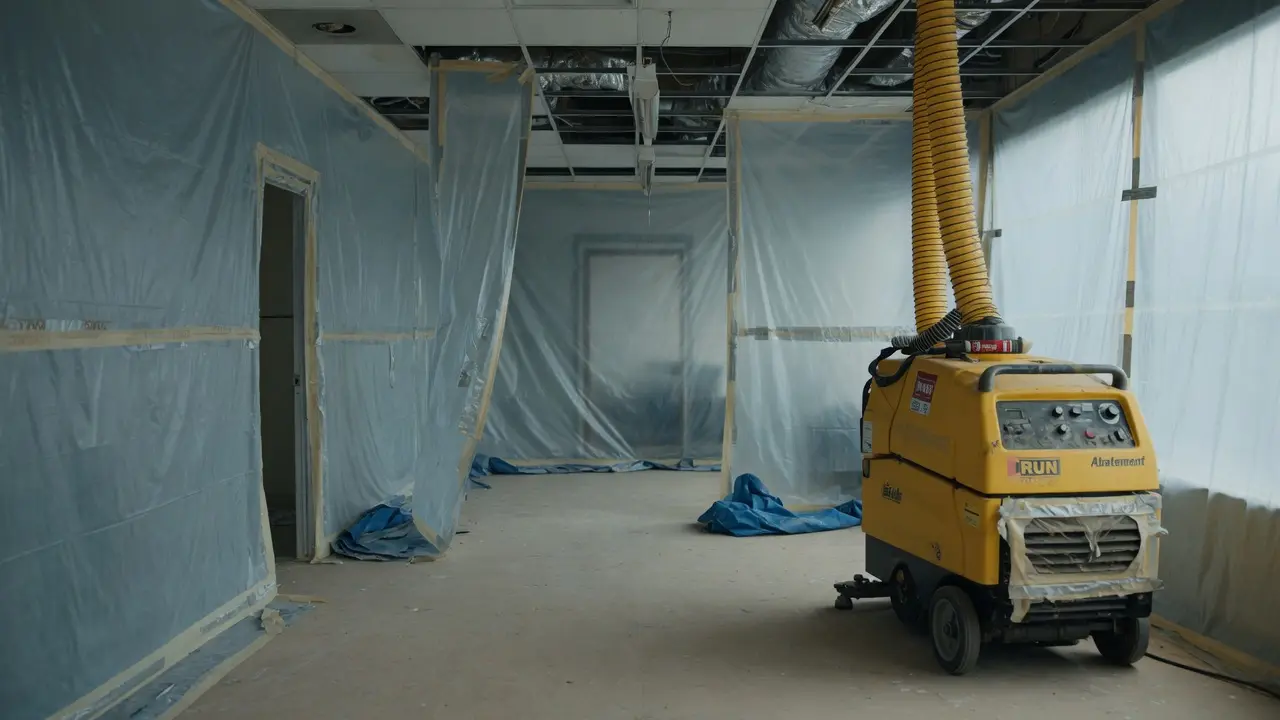
We’ve seen it a hundred times in my 20 years: a well-meaning maintenance guy tries to scrub down a moldy patch in the breakroom without proper containment. Within 48 hours, the spores have been sucked into the return air vents and distributed across three different floors. Now, a $2,000 spot-cleaning job has turned into a $50,000 commercial mold removal project. Professional remediation isn’t just about cleaning, it’s about isolation. We use negative air pressure machines and HEPA-filtered scrubbers to ensure that while we’re disturbing the mold, we aren’t spreading it. In a business environment, you cannot afford to “test” a DIY solution. You need it done right the first time so you can get back to work.
The Air Your Business Breathes: Indoor Air Quality Solutions
We often take the air for granted until it’s working against us. In the modern American workplace, air quality is a major pillar of productivity. If the air is heavy with spores, your team is going to be sluggish, irritable, and physically unwell. This is why we focus so heavily on indoor air quality solutions as part of a holistic building health plan. This involves more than just swapping out a filter. It’s about managing the “dew point” within your building. If your HVAC system is oversized (a common problem in US commercial builds), it might cool the air too quickly without removing the humidity. This leaves your ducts damp, the perfect nursery for mold. Modern solutions involve integrated dehumidification and UV-C light arrays within the air handlers to kill spores on contact, ensuring the air circulating through your cubicles or shop floor is actually clean.
Essential Tactics for Facility Managers
If you’re overseeing a property, you need a “defense-in-depth” strategy. Here’s what the pros look for: Thermal Imaging Audits: We use FLIR cameras to find cold spots behind walls where condensation is collecting. This catches leaks before they ever show a water stain. The 24-Hour Rule: If a pipe bursts or a roof leaks, you have exactly 24 to 48 hours to dry it out before mold spores begin to colonize. If you miss that window, you aren’t just drying, you’re remediating. Vapor Barrier Integrity: In many US climates, the crawlspace or basement is the “lungs” of the building. If your vapor barriers are shredded or missing, your building is literally inhaling moisture from the earth.
Navigating the Legal and Regulatory Minefield
In the USA, we operate under the watchful eye of OSHA and various state-level health departments. If a mold issue is documented and ignored, you’re looking at more than just a fine. You’re looking at a breach of the “implied warranty of habitability.” This is where things get expensive. A professional remediation firm provides more than just a clean building; they provide a paper trail. From the initial moisture mapping to the final “clearance” air sampling performed by a third-party lab, this documentation is your shield. It proves to your insurance carrier, your tenants, and the law that you acted with due diligence. In the event of a future sale, having a “clean bill of health” on file for your property can be the difference between a smooth closing and a deal-breaker.
The Sharpline Process: Precision Over Guesswork
At Sharpline Inc, we don’t just show up with a spray bottle and a rag. Our approach is surgical. We begin by identifying the moisture source, because if you don’t fix the water, the mold will be back in two weeks. We then establish “Zone 0” containment. This ensures your employees in the next room can keep working in total safety while we handle the heavy lifting behind the plastic. We utilize industrial-strength, EPA-registered antimicrobials that are designed for the rigors of a commercial environment. We don’t just mask odors, we neutralize the biological threat at the cellular level. Once the physical mold is gone, we focus on the “post-remediation verification” to ensure the spore counts inside are lower than the natural background levels outside. That’s the gold standard.
Keeping the Spores at Bay Long-Term
Once your building is clean, the goal is to keep it that way. This requires a shift in how you view maintenance. It means checking the flashing on the roof every spring, ensuring the landscaping isn’t directing water toward the foundation, and maybe most importantly, training your janitorial staff on what to look for. A “mold-literate” maintenance team is your best defense. If they know that a damp ceiling tile isn’t just a nuisance but a “Category 3” warning sign, they can save you a fortune. We often work with property owners to set up ongoing moisture monitoring systems that alert you the moment a leak is detected in a sensitive area.
Final Steps for Your Property and Business
At the end of the day, managing a commercial property in the States means staying one step ahead of environmental hazards that could shutter your doors. Keeping a tight grip on moisture levels and air quality isn’t just a maintenance chore, it’s the best insurance policy you have for your facility’s long-term health. If you’ve spotted a suspicious stain on a ceiling tile or your team is complaining about a funky smell in the breakroom, the worst thing you can do is “wait and see.” In the world of mold, a small problem on Monday can become a full-blown remediation crisis by Friday. If you’re worried that your property might be trending in the wrong direction, don’t let the stress sit on your shoulders. Reach out to the team at Sharpline Inc. We’ll get a professional inspector out there to pull back the curtain and give you a straight-up assessment of what’s actually going on. Our goal is to handle the heavy lifting so you can get back to running your business with the confidence that your air is clean and your structure is sound. For a deep dive into how we tackle these issues or to book an inspection, head over to https://sharplineinc.com/ and let’s get your workplace back to peak condition. Table of Contents
Mold Remediation for Commercial Properties: A Complete Guide
Running a business in the United States isn’t just about hitting your quarterly targets; it’s…
Why Preventive Maintenance Saves Property Owners Money
Ask any seasoned property manager in the States about their absolute worst day on the…
Emergency Property Repair: What Every Property Manager Should Know
It’s 3:00 AM on a Tuesday. The phone buzzes on your nightstand, glowing with a…
How Much Does Apartment Turnover Cost in Philadelphia? A Detailed Breakdown for Landlords
If you own rental property in Philadelphia, you know the feeling. That email hits your…
The Ultimate Property Maintenance Checklist for Commercial Buildings
Managing a commercial property in the States is Ask any seasoned property manager in the States It’s 3:00 AM on a Tuesday. The phone